This day

May 30, 2029

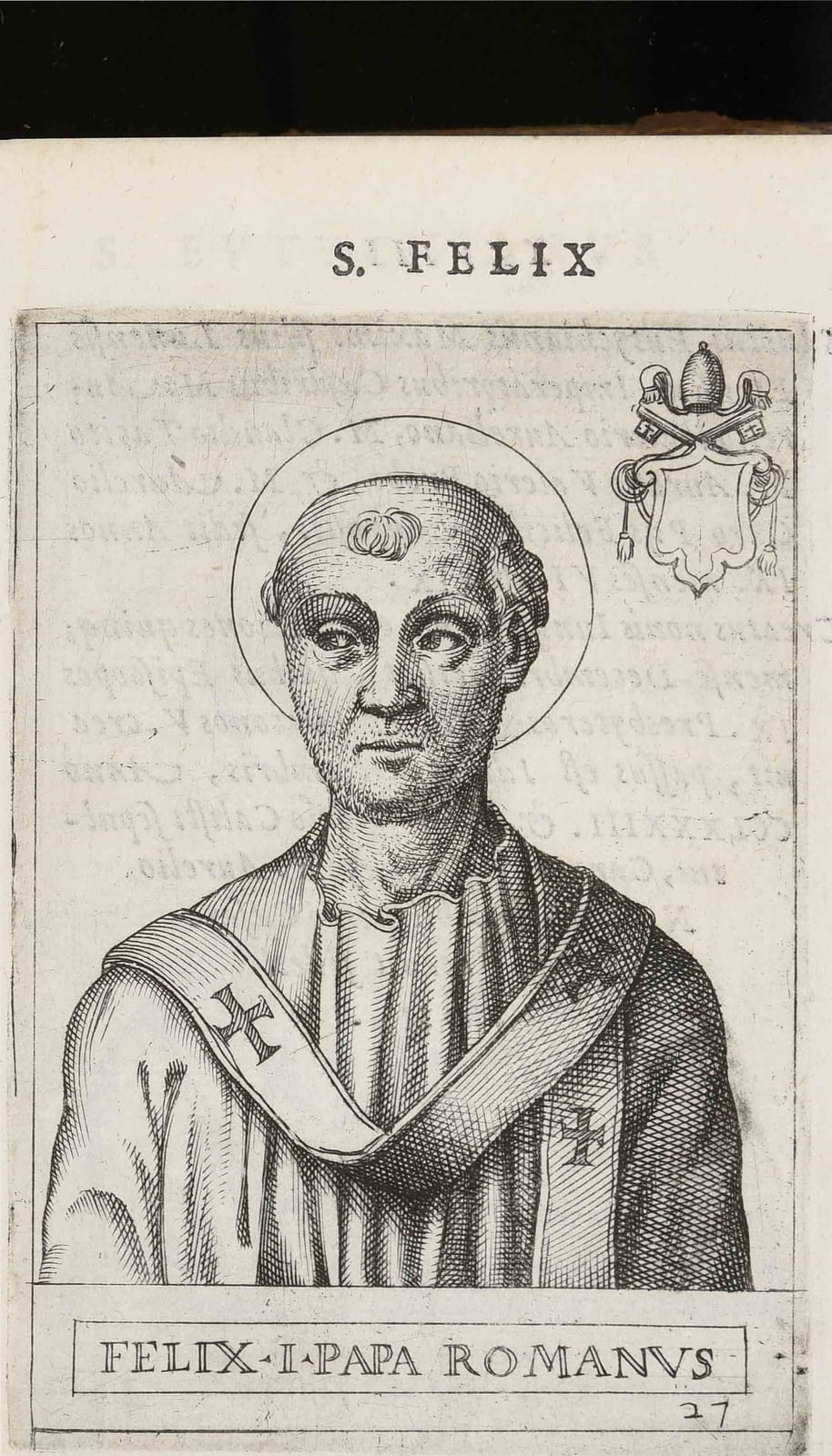
Felix I
Felix I, Giovanni Battista de' Cavalieri (1525–1601), 1580. Credits

After Pentecost

May 30, 2029

May 30: St. Felix I, Pope and Martyr

From Dom Guéranger’s The Liturgical Year.

THE holy Popes of the primitive ages of the Church abound during these last days of our Paschal season. To-day we have Felix I, a martyr of the persecution under Aurelian, in the third century. His Acts have been lost, with the exception of this one detail: that he proclaimed a dogma of the Incarnation, with admirable precision, in a letter addressed to the Church of Alexandria, a passage of which was read with much applause at the two (Ecumenical Councils of Ephesus and Chalcedon.

We also learn from a law he passed for those troubled times of the Church, that this holy Pontiff was zealous in procuring for the martyrs the honour that is due to them. He decreed that the Holy Sacrifice should be offered up on their tombs. The Church still keeps this law in mind by requiring that all altars, whether fixed or portable, must have, amongst the relics that are placed in them, a portion of some belonging to the martyrs. We shall have to speak of this custom in a future volume.

Felix Romanus, patre Constantio, Aureliano imperatore præfuit Ecclesiæ.

Wednesday after Trinity Sunday

From Dom Guéranger’s The Liturgical Year.

We have not, as yet, reached the feast of the divine Memorial; not until the morrow, shall we have it in all its splendour. But this evening, at first Vespers, the Church will begin her acclamations to the eternal Priest; and, although the sovereign Pontiffs have not ordained that a vigil, properly so called, shall precede the feast of Corpus Christi, yet have they granted indulgences to a voluntary fast practised on this its eve. Let us now resume the history of the Church’s worship of the great mystery.

We have already seen how the unity of the Church is based upon the Eucharist. Our Lord Jesus Christ, in that Sacrament, is the corner-stone, upon which rises, in the harmony of its several parts, the temple of living stones, built to the glory of God. Jesus is the High Priest, ordained for men, Himself being Man, that He may present to God the homage of His brethren, by offering, to His and their Father, a Sacrifice in the name of all.

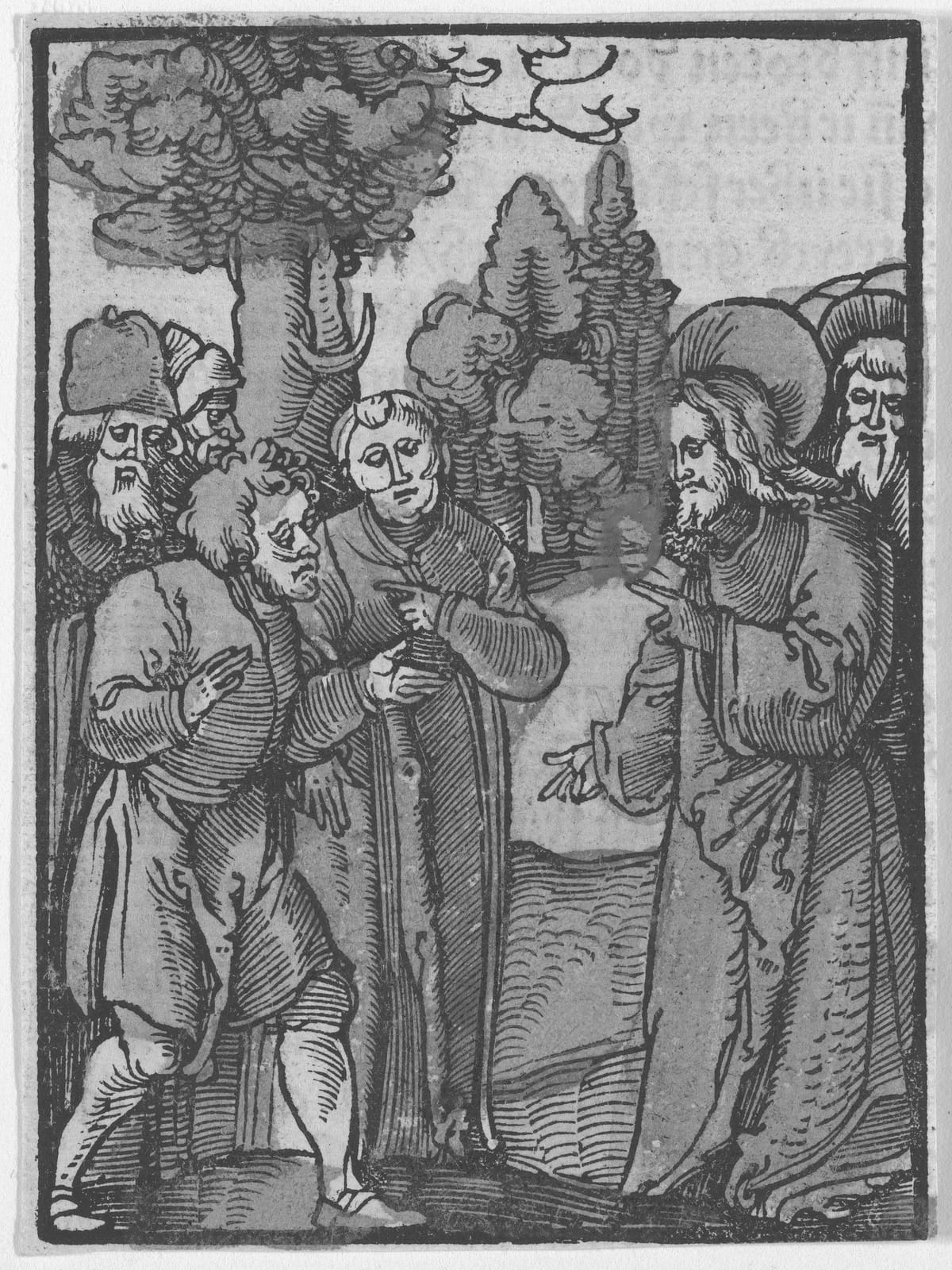
Christ speaking with the Pharisees
Hans Schäufelein (1480–1540), Christ and the Pharisees, from Das Plenarium, 1517. Credits

Email view of this day