Daily reading
Epiphanytide
Double of the II Class · Temporal
January 17, 2027
From Dom Guéranger’s The Liturgical Year.
Holy Name on the 2nd Sunday after Epiphany; St. Antony transferred to Jan 28.Rubrics

|
Sunday between the Circumcision and the Epiphany (or, the Feast of the Holy Name of Jesus)
(When the first Sunday occurring in the year falls on January 1 or 6, or 7, the feast of the holy Name is kept on January 2.)
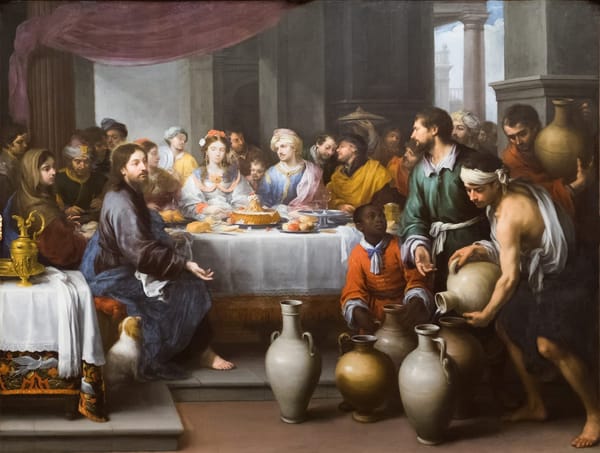
THE second Sunday after the Epiphany, which recalls the Marriage feast of Cana, was at first chosen as the day on which to honour the most holy Name of Jesus. It is on the Wedding Day that the Bridegroom gives his Name to the Bride, and it is the sign that, from that day forward, she belongs to him alone. The Church, therefore, wishing to honour a name so precious to her with a special feast, could find no day more appropriate for it than that of the Marriage at Cana. But now she has chosen for the celebration of this august Name, a day closer to the Anniversary on which it was given, ‘after eight days were accomplished, his name was called Jesus’; she leaves, however, the commemoration of the Sacred Nuptials to the Sunday of which it has ever been the glory.
In the Old Covenant, the Name of God inspired fear and awe: nor was the honour of pronouncing it granted to all the children of Israel. We can understand this. God had not yet come down from heaven to live on earth, and converse with men; he had not yet taken upon himself our poor nature, and become Man like ourselves; the sweet Name expressive of love and tenderness, could not be applied to him.
But, when the fulness of time had come—when the mystery of love was about to be revealed—then did heaven send down the Name of ‘Jesus ' to our earth, as a pledge of the speedy coming of him who was to bear it. The archangel Gabriel said to Mary: Thou shalt call his Name Jesus. ‘Jesus’ means Saviour. How sweet will this Name not be to poor lost man! It seems to link earth to heaven! No name is so amiable, none is so powerful. Every knee in heaven, on earth, and in hell, bows in adoration at hearing this Name! and yet, who can pronounce it, and not feel love spring up within his heart? But we need such a saint as Bernard, to tell us of the power and sweetness of this blessed Name. He thus speaks of it in one of his Sermons.
The Name of Jesus is Light, and Food, and Medicine. It is Light, when it is preached to us; it is Food, when we think upon it; it is the Medicine that soothes our pains when we invoke it. Let us say a word on each of these. Tell me, whence came there, into the whole world, so bright and sudden a light, if not from the preaching of the Name of Jesus? Was it not by the light of this Name that God called us unto his admirable Light? Wherewith being enlightened, and in this light, seeing the Light, we take these words of Paul as truly addressed to ourselves: Heretofore, you were darkness; but now, light in the Lord.
Nor is the Name of Jesus Light only; it is also Food. Art thou not strengthened, as often as thou thinkest of this Name? What is there that so feeds the mind of him that meditates upon this Name? What is there that so restores the wearied faculties, strengthens virtue, gives vigour to good and holy habits, and fosters chastity? Every food of the soul is dry, that is not steeped in this unction; it is insipid, if it be not seasoned with this salt. If thou write, I relish not thy writing, unless I read there the Name of Jesus. If thou teach me, or converse with me, I relish not thy words, unless I hear thee say the Name of Jesus. Jesus is honey to the mouth, and music to the ear, and gladness to the heart.
It is also Medicine. Is any one among you sad? Let but Jesus come into his heart, and the mouth echo him, saying Jesus! and lo! the light of that Name disperses every cloud, and brings sunshine back again. Have any of you committed sin? and is despair driving you into the snare of death? Invoke the Name of life, and life will come back to the soul. Was there ever a man, that, hearing this saving Name, could keep up that common fault of hardness of heart, or drowsiness of sluggishness, or rancour of soul, or languor of sloth? If any one, perchance, felt that the fountain of his tears was dry, did it not gush forth more plentifully than ever, and flow more sweetly than ever, as soon as he invoked the Name of Jesus? If any of us were ever in danger, and our heart beat with fear, did not this Name of power bring us confidence and courage the moment we pronounced it? When we were tossed to and fro by perplexing doubts, did not the evidence of what was right burst on us as we called upon the Name of light? When we were discouraged, and well nigh crushed, by adversity, did not our heart take courage, when our tongue uttered the Name of help? All this is most true; for all these miseries are the sicknesses and faintings of our soul, and the Name of Jesus is our Medicine.
But, let us see how all this comes to pass. Call upon me in the day of trouble, says the Lord; I will deliver thee, and thou shalt glorify me.1 There is nothing which so restrains the impulse of anger, calms the swelling of pride, heals the wound of envy, represses the insatiability of luxury, smothers the flame of lust, quenches the thirst of avarice, and dispels the fever of uncleanliness—as the Name of Jesus. For when I pronounce this Name, I bring before my mind the Man, who, by excellence, is meek and humble of heart, benign, sober, chaste, merciful, and filled with everything that is good and holy, nay, who is the very God Almighty—whose example heals me, and whose assistance strengthens me. I say all this, when I say Jesus. Here have I my model, for he is Man; and my help, for he is God; the one provides me with precious drugs, the other gives them efficacy; and from the two I make a potion such as no physician knows how to make.
Here is the electuary, my soul, hid in the casket of this Name Jesus; believe me, it is wholesome, and good for every ailment thou canst possibly have. Ever have it with thee, in thy bosom and in thy hand; so that all thy affections and actions may be directed to Jesus.2
The feast of the Holy Name is of comparatively recent origin, its first promoter was St Bernardine of Siena, who lived in the fifteenth century. This holy man established the practice of representing the Holy Name of Jesus surrounded with rays, and formed into a monogram of its three first letters, ihs.3 The custom spread rapidly through Italy, and was zealously propagated by the great St John of Capestrano, who, like St Bernardine of Siena, was of the Order of Friars Minor. The Holy See gave its formal approbation to this manner of honouring the Name of our Saviour, and, in the early part of the sixteenth century, Pope Clement VI, after long entreaties, granted to the whole Franciscan Order the privilege of keeping a special Feast in honour of the Most Holy Name of Jesus.
Rome extended the same favour to various Churches; and, at length, the Feast was inserted in the universal Calendar. It was in the year 1721, at the request of Charles VI, Emperor of Germany, that Pope Innocent XII decreed that the Feast of the Most Holy Name of Jesus should be kept throughout the whole Church; he also chose the Second Sunday after the Epiphany as the day, but as we have already explained, the feast is now fixed for the Sunday following the Circumcision.
Mass
The Church begins her chants by proclaiming the glory of the Name of her Spouse. Heaven, earth, and hell! bow ye down at the sound of this adorable Name, for the Son of Man, who bears this Name, is also the Son of God.
Introit
In the Collect, the Church, which, during her exile, finds consolation in the Name of her divine Spouse, prays that she may see his blessed face in heaven.
Collect
No commemoration is made of the Sunday; but on January 2, 3, or 4 the occurring Octave Day is commemorated in private Masses only; and on January 5 the Vigil of the Epiphany is commemorated in all Masses, and St Telesphorus, Pope and Martyr, in private Masses.
Epistle
Cap. IV.In diebus illis, Petrus Spiritu Sancto repletus, dixit: Principes populi, et seniores, audite: si nos hodie dijudicamur in benefacto hominis infirmi, in quo iste salvus factus est; notum sit omnibus vobis, et omni plebi Israel, quia in Nomine Domini nostri Jesu Christi Nazareni, quem vos crucifixistis, quem Deus suscitavit a mortuis, in hoc iste adstat coram vobis sanus. Hic est lapis qui reprobatus est a vobis ædificantibus, qui factus est in caput anguli; et non est in alio aliquo salus. Nec enim aliud nomen est sub cœlo datum hominibus, in quo oporteat nos salvos fieri.
Ch. IV.In those days: Peter being filled with the Holy Ghost, said: Ye princes of the people and ancients, hear. If we this day are examined concerning the good deed done to the infirm man, by what means he hath been made whole, be it known to you all, and to all the people of Israel, that by the name of our Lord Jesus Christ of Nazareth, whom you crucified, whom God hath raised from the dead, even by him this man standeth here before you whole. This is the stone which was rejected by you the builders, which is become the head of the corner; neither is there salvation in any other. For there is no other name under heaven given to men whereby we must be saved.
Oh! how true is this, dear Jesus! no other Name but thine could give us salvation, and thy Name means Saviour. Be thou praised for having taken such a Name! Be thou praised for having saved us! Thou art of heaven heavenly, and yet thou takest a Name of earth, and one which our mortal lips can say.
The holy Church then commences a second canticle in praise of this divine Name, which is blessed by all nations, for it is the name of him who redeemed them all.
Gradual
After Septuagesima, the following Tract is sung, instead of the Alleluia.
Tract
Gospel
Cap. II.In illo tempore: Postquam consummati sunt dies octo, ut circumcideretur Puer, vocatum est Nomen ejus Jesus; quod vocatum est ab Angelo, priusquam in utero conciperetur.
Ch. II.At that time, After eight days were accomplished that the Child should be circumcised, his name was called Jesus, which was called by the angel, before he was conceived in the womb.
It is during the first shedding of thy Blood, by the Circumcision, that thou didst receive this Name of Jesus, dear Lord! and it was fitting that it should be so, for this Name signifies Saviour, and we could not be saved but by thy Blood. Our immortal life is to be purchased at the price of thy Death! This truth is expressed to us by thy Name, O Jesus! Saviour! Thou art the Vine, and thou invitest us to drink of thy delicious Wine; but the heavenly Fruit must be first unsparingly pressed in the wine-press of thy Eternal Father’s justice; we cannot drink of its juice, until it shall have been tom from the branch and bruised for our sakes. May thy sacred Name ever remind us of this sublime Mystery, and may the remembrance keep us from sin, and make us always faithful.
During the Offertory, the holy Church resumes her chants in honour of the Holy Name; she celebrates the mercies, which are reserved for all them that call on this Name.
Offertory
Secret
The Faithful having received the heavenly food—the Body and Blood of their Saviour, Jesus—the Church, filled with gratitude towards her Lord, invites all nations to glorify the Name of him who made and redeemed them.
Communion
The holy Church has now but one more prayer to make: it is, that the names of her children may be written, under the glorious Name of 'Jesus,' in the book of eternal predestination, which is, as it were, the deed of the contract made with us by our Saviour. This happiness will assuredly be ours, if we are but wise enough to profit by all that this sweet Name offers us, and to make our life conformable to the lessons it teaches us.
Postcommunion
Vespers
Psalm: Dixit Dominus, p. 89.
Psalm: Confitebor, p. 90.
Psalm: Beatus vir, p. 91.
Psalm: Laudate pueri, p. 92.
Psalm 115
Ego dixi in excessu meo: * Omnis homo mendax.
Quid retribuam Domino, * pro omnibus, quæ retribuit mihi?
Calicem salutaris accipiam: * et Nomen Domini invocabo.
Vota mea Domino reddam coram omni populo ejus: * pretiosa in conspectu Domini mors sanctorum ejus.
O Domine, quia ego servus tuus: * ego servus tuus et filius ancillæ tuæ.
Dirupisti vincula mea: * tibi sacrificabo hostiam laudis, et Nomen Domini invocabo.
Vota mea Domino reddam in conspectu omnis populi ejus: * in atriis domus Domini, in medio tui Jerusalem.
I said in my excess: Every man is a liar.
What shall I render to the Lord, for all the things that he hath rendered to me?
I will take the chalice of salvation: and I will call upon the Name of the Lord.
I will pay my vows to the Lord before all his people: precious in the sight of the Lord is the death of his saints.
O Lord, for I am thy servant: I am thy servant, and the son of thy handmaid.
Thou hast broken my bonds: I will sacrifice to thee the sacrifice of praise, and I will call upon the Name of the Lord.
I will pay my vows to the Lord in the sight of all his people, in the courts of the house of the Lord, in the midst of thee, O Jerusalem.
Capitulum (Phil, ii)
Hymn4
Dans vera cordi gaudia:
Sed super mel et omnia,
Ejus dulcis præsentia.
Nil auditur jucundius,
Nil cogitatur dulcius,
Quam Jesus Dei Filius.
Quam pius es petentibus!
Quam bonus te quærentibus!
Sed quid invenientibus?
Nec littera exprimere;
Expertus potest credere,
Quid sit Jesum diligere.
Qui es futurus præmium,
Sit nostra in te gloria,
Per cuncta semper sæcula.
which gives true joy to the heart!
But, the sweet presence of him who bears that Name
is sweeter than honey and every pleasure.
no word is so sweet,
no thought is so sweet as
—Jesus, the Son of God!
how merciful thou art to them that ask for thee!
how good to them that seek thee!
but, oh! what art thou to them that find thee!
no pen can describe,
what it is to love Jesus.
He that has felt it, can alone believe the bliss.
as thou wilt, one day,
be our reward.
May our glory for eternal ages be in thee.
Antiphons Of The Magnificat
Ant. (2 Vp.). Thou shalt call his Name Jesus; for he shall save his people from their sins. Alleluia.
Let us pray
The two Hymns which follow, and which are used by the Church for the Matins and Lauds of the Feast, are by the same writer as the Hymn of Vespers, Jesu dulcis memoria. They were for a long time attributed to St Bernard; but Manuscripts have been found, which prove beyond a doubt, that they were composed by a holy Abbess of the Order of St Benedict, who lived in the fourteenth century.
Hymn
Et triumphator nobilis,
Dulcedo inefabilis,
Totus desiderabilis.
Tunc lucet ei veritas,
Mundi vilescit vanitas,
Et intus fervet charitas.
Fons vivus, lumen mentium,
Excedens omne gaudium,
Et omne desiderium.
Jesum omnes agnoscite;
Amorera ejus poscite;
Jesum ardenter quærite,
Quærendo inardescite.
Te nostra, Jesu, vox sonnet.
Nostri te mores exprimant,
Te corda nostra diligant,
Et nunc et in perpetuum.
noble Conqueror!
ineffable Sweetness!
most lovely Jesus!
then does truth shine upon her,
the vanity of the world grows contemptible,
and charity burns within.
Fount of life! Light of the soul!
Thou surpassest every joy,
and every desire.
Acknowledge this Jesus, all ye people!
Pray for his love,
seek him with all eagerness,
and, as ye seek him, burn with love of him.
May our tongue proclaim thee, O Jesu!
may our lives reflect thy virtues!
may our hearts love thee,
both now and for eternity!
Amen.
Hymn
In aure dulce canticum,
In ore mel mirificum,
In corde nectar cœlicum.
Qui bibunt adhuc sitiunt;
Desiderare nesciunt
Nisi Jesum, quem diligunt.
O Jesu, mi dulcissime,
Spes suspirantis animæ!
Te quærunt piæ lacrymæ,
Te clamor mentis intimæ.
Mane nobiscum, Domine,
Et nos illustra lumine;
Pulsa mentis caligine,
Mundum reple dulcedine.
Jesu, flos Matris virginis,
Amor nostræ dulcedinis,
Tibi laus, honor Nominis,
Regnum beatitudinis.
Thou art sweet music to the ear,
sweetest honey to the mouth,
heavenly nectar to the heart!
they that drink, still thirst to drink;
they know not what to desire
save the Jesus whom they love.
O Jesus! my sweetest Jesus!
hope of this panting heart!
these tears of love, this cry of my innermost soul,
both ask thee to be mine.
Abide with us, O Lord!
and illumine us with light;
drive darkness from our souls,
and fill the world with thy sweetness.
To thee, O Jesus! thou Flower of thy Virgin-Mother,
thou love of our delighted nature!
be praise, and the honour of thy Name,
and the kingdom of eternal bliss.
Amen.
The following Sequence is the composition of the devout Bernardine de Bustis, a Franciscan, who also composed, during the pontificate of Sixtus IV, an Office and a Mass of the Holy Name of Jesus.
Sequence
Judæorum Rex amœnus,
Pius, pulcher, floridus.
Subit mortem cum tormentis,
Factus pallens, lividus.
Dulce Nomen et cognomen,
Hoc transcendens est prænomen
Omnibus nominibus.
Mulcet reos, sanat eos;
Fovet justos, munit eos;
Servans ab insultibus.
Hujus Regis sub vexillo
Statu degis in tranquillo:
Hostes tui fugiunt.
Nomen Jesu meditatum
Belli fugat apparatum,
Hostes victi fugiunt.
Hoc est Nomen recolendum,
Quod sic semper est tremendum
Malignis spiritibus.
Hoc est Nomen salutare,
Et solamen singulare,
Quod succurrit tristibus.
Hoc nos decet honorare,
Arca cordis inserare,
Cogitare, peramare,
Amore sed heroico.
Ignatius hoc docuit,
Hoc passus insonuit,
Cor ejus scissum patuit
Inscriptum Jesu cœlico.
Ut quid majora cupimus
Quam quod Jesus sit intimus:
Qui est præamantissimus,
Et quærit nos amare.
Amat ferventissime,
Amat constantissime,
Amat fidelissime,
Et suos vult juvare.
Nomen suum fecit tale.
Ut sit cunctis cordiale,
Capitale, principale,
Dilectum ex intimis.
Habent hoc naturae jura:
Ut amantem tota cura
Redamemus, placitura
Præstantes ex animis.
Jesu Nomen omne bonum
Tenet, dulcem facit sonum:
Promeretur regni thronum,
Auditum lætificat.
In hoc lucet splendor Patris,
In hoc patet decor Matris:
In hoc fulget honor Patris,
Hoc fratres magnificat.
Quare Nomen Jesu mire
Facit bonos concupire
Sui inhærentia.
Jesu, pulcher in decore,
Summe bonus in valore,
Mitis, lenis, cum dulcore
Pronus ad clementiam.
Jesus est Rex gloriosus,
Jesus forma speciosus:
Jesus lingua gratiosus,
Et mirandus opere.
Jesus fortis, animosus,
Jesus pugil vigorosus,
Jesus donis copiosus,
Et gaudet tribuere.
Jesus pie viscerosus,
Jesus ductor luminosus,
Jesus est deliciosus,
Et sapit dulcissime.
Jesus cunctis fructuosus,
Jesus totus virtuosus,
Fovet suos optime.
Summe celsus in honore,
Summe gratus in amore,
Omnem laudem obtinet.
In sciendo omne sapit,
Ambiendo cuncta capit,
Diligendo corda rapit,
Et illata detinet.
Eia nobis Nomen gratum,
Dulcis Jesus appellatum:
Sit in corde sic firmatum,
Ut non possit erui.
Hoc reatum peccatorum
Tollat, præstet jubilorum
Odas: sede beatorum
Donet nobis perfrui.
dear King of the Jews!
the good, the beautiful, the flowerlike Jesus!
for the salvation of his people:
he is pale and livid with his wounds.
Sweet Name and epithet!
It is the Name
surpassing all names.
It softens the sinner's heart, and heals him:
it warms up the just, and strengthens them,
and defends them from temptation.
Under this King's standard,
thou livest in peace,
for thine enemies fly before thee.
Think upon the Name of Jesus,
and it will break up thine enemies' plans,
conquer them, and put them to flight.
This is the Name deserving of all honour,
at which the wicked spirits
ever tremble.
This is the Name of salvation,
and the wonderful consolation
which comforts the sorrowful.
It behoves us to honour this Name,
put it in the treasury of our heart,
think on it, love it,
but love it bravely.
Ignatius taught men this Name;
when he suffered martyrdom he had it on his lips,
and when his heart was opened,
there was found written on it this heavenly word Jesus.
What could we wish for better than this,
to have Jesus as a bosom-friend?
He is lovely above all measure,
and desires to love us.
He loves most ardently,
he loves most constantly,
he loves most faithfully,
and seeks how to assist his friends.
He made his own Name,
and he made it such as that all should love it above all names,
and before all names,
and more intimately than all other names.
This is nature’s law:
that we study our best to love him who loves us,
and cordially do all we can
to please him.
The Name of Jesus includes all good things;
its sound is sweet;
it merits for us a throne in the kingdom;
it gladdens our hearing.
The brightness of the Father shines in it;
the beauty of the Mother beams through it;
the honour of the Father is reflected in it;
the glory of the Brethren comes from it.
Would any one, therefore, know,
how it is that the Name of Jesus
so wonderfully causes the good
to desire him whose Name it is?
It is that Jesus is beautiful in comeliness,
infinitely good in worth,
meek, gentle, and sweetly
prone to mercy.
Jesus is the King of glory;
Jesus is beautiful in appearance;
Jesus is graceful in speech,
and admirable in his works.
Jesus is strong, and valiant;
Jesus is a vigorous combatant;
Jesus is generous in his gifts,
and loves to give.
Jesus is tenderly compassionate;
Jesus is the enlightened guide;
Jesus is the delight of all who know him,
and most sweet is his company.
Jesus brings the fruit of blessings to all;
Jesus is the source of every virtue,
and takes the tenderest care of those that are his.
There is none equal to him in honour,
there is none like him in affection,
and all the earth praises him.
He knows all things,
and holds all things in his omnipresent providence;
his love wins him the hearts of his creatures
and keeps them fastened to himself.
All hail, then, to this Name so loved
—‘Sweet Jesus'!
May it be so fixed within our hearts,
that no power may take it from us!
May it bring us the forgiveness of our sins;
may it inspire us to hymn God's praise;
may it lead us to the possession
of our blissful throne in heaven.
We cannot refuse to our readers the following Hymn from the ancient Missals of Germany, notwithstanding its being, in several of the ideas and expressions, a repetition of the one just given.
Hymn
In excelsis adoratum,
Nomen summæ gloriæ:
Et in terris nunciatum
Genitrici gratiæ.
Circumcisum more patrum,
Salvatorem nominat.
Universo publicatum
Mundo Nomen hoc beatum
Credentes salvificat.
Splendor atque unitatis;
Hoc cœlum lætificat.
In hoc fulget honor Patris,
In hoc patet decor Matris,
Hoc fratres glorificat.
Hoc est Nomen salutare,
Et solamen singulare,
Quod succurrit tristibus.
Benedicere, laudare
Semper lætis mentibus.
Hoc est melos prædicatum,
Dulce mel est invocatum,
Servat ab insultibus.
Jubilus est cogitatum,
Nomen mire formidatum
Malignis spiritibus.
Ecce Nomen gratiosum,
Fructuosum, virtuosum
Præ cunctis nominibus.
Speciosum, amorosum,
Ostendit hominibus.
Nomen pulchrum in decore,
Summe bonum in valore,
Intus sapit dulciter;
Summe potens in vigore,
Summe celsum in honore
Delectat feliciter.
Bone Jesu, et earum
Lumen indeficiens,
Propter Nomen tuum carum
Tetrum chaos tenebrarum
Obstrue, nos muniens.
O Reformator cunctarum
Nationum humanarum,
Vita mortem auferens,
Restaurator ruinarum
Virtutum angelicarum,
Te ipsum sis largiens.
adored in heaven,
and expressive of infinite glory!
and announced on earth
to the Mother of divine grace.
when her Son had been circumcised according to the Jewish ceremony,
she called him Jesus.
to the whole world,
and saves them that believe.
and Unity blazes forth in this Name;
it gladdens heaven;
the beauty of the Mother beams through it;
the glory of the Brethren comes from it.
This is the Name of salvation,
and the wonderful consolation
which comforts the sorrowful.
and bless, and praise,
with joyful hearts, this dear Name.
It is music when preached to us;
it is sweet honey when invoked by us;
it defends us from temptation.
and the wicked spirits are seized
with strange fear when they hear us say it.
This is the Name that is full of grace,
and fruit, and virtue,
above all names.
the gracious, the beautiful,
the loving face of God.
It is fair in beauty,
it is surpassingly good in worth,
its inner relish is most sweet;
most high in honour,
and gives a happy delight.
Do thou, therefore, good Jesus!
Shepherd and Light
unfailing of our souls!
let not the dismal chaos of darkness
ingulf us.
O thou the Reformer
of all nations,
that destroyest death by thy Life!
O Restorer of the loss
sustained by the Angels,
give thyself unto us.
Amen.
- Ps. xlix 15. ↩︎
- Fifteenth Sermon on the Canticle of Canticles. ↩︎
- The Name was, anciently, often written Ihesus; hence, in its contracted form alluded to, the letter h would be given: the e following was virtually included in the aspirate. [Translator.] ↩︎
- In the Monastic Breviary, it is preceded by this Responsory. ℟. Adjutorium nostrum in Nomine Domini, * Alleluia, alleluia. Adjutorium. ℣. Qui fecit cœlum et terrain. * Alleluia. Gloria Patri. Adjutorium. ↩︎
The Second Sunday after Epiphany
THE third Mystery of the Epiphany shows us the completion of the merciful designs of God upon the world, at the same time that it manifests to us, for the third time, the glory of our Lord and Saviour, Jesus Christ. The star has led the soul to faith; the sanctified Waters of the Jordan have conferred purity upon her; the Marriage-Feast unites her to her God. We have been considering, during this Octave, the Bridegroom revealing himself to the Spouse; we have heard him calling her to come to him from the heights of Libanus; and now, after having enlightened and purified her, he invites her to the heavenly feast, where she is to receive the Wine of his divine love.
A Feast is prepared;1 it is a Marriage-Feast; and the Mother of Jesus is present at it, for it is just that, having co-operated in the mystery of the Incarnation of the Word, she should take part in all that her Son does, and in all the favours he bestows on his elect. But, in the midst of the Feast, the Wine fails. Wine is the symbol of Charity or Love, and Charity had failed on the earth; for the Gentiles had never tasted its sweetness; and as to the Synagogue, what had it produced but wild grapes?2 The True Vine is our Jesus, and he calls himself by that name.3 He alone could give that Wine which gladdeneth the heart of man;4 he alone could give us that Chalice which inebriateth,5 and of which the Royal Psalmist prophesied.
Mary said to Jesus: They have no Wine. It is the office of the Mother of God to tell him of the wants of men, for she is also their Mother. But Jesus answers her in words which are apparently harsh: Woman! what is it to me and to thee? My hour is not yet come. The meaning of these words is, that, in this great Mystery, he was about to act, not as the Son of Mary, but as the Son of God. Later on, the hour will come when, dying upon the Cross, he will do a work, in the presence of his Mother, and he will do it as Man, that is, according to that human nature which he has received from her. Mary at once understands the words of her Son, and she says to the waiters of the Feast, what she is now ever saying to her children: Do whatsoever he shall say to you.
Now, there were six large waterpots of stone there, and they were empty. The world was then in its Sixth Age, as St Augustine and other Holy Doctors tell us. During these six ages, the earth had been awaiting its Saviour, who was to instruct and redeem it. Jesus commands these waterpots to be filled with water; and yet water does not suit the Feast of the Spouse. The figures and the prophecies of the ancient world were this water, and until the opening of the Seventh Age, when Christ, who is the Vine, was to be given to the world, no man had contracted an alliance with the Divine Word.
But, when the Emmanuel came, he had but to say, Now draw out, and the waterpots were seen to be filled with the wine of the New Covenant, the Wine which had been kept to the end. When he assumed our human nature—a nature weak and unstable as water—he effected a change in it; he raised it up even to himself, by making us partakers of the divine nature;6 he gave us the power to love him, to be united to him, to form that one Body, of which he is the Head, that Church of which he is the Spouse, and which he loved from all eternity, and with such tender love, that he came down from heaven to celebrate his nuptials with her.
St Matthew, the Evangelist of the Humanity of our Lord, has received from the Holy Ghost the commission to announce to us the Mystery of Faith by the star; St Luke, the Evangelist of Jesus' Priesthood, has been selected, by the same Holy Spirit, to instruct us in the Mystery of the Baptism in the Jordan; but the Mystery of the Marriage-Feast was to be revealed to us by the Evangelist John, the Beloved Disciple. He suggests to the Church the object of this third Mystery, by this expression: This beginning of miracles did Jesus in Cana of Galilee, and he manifested his glory.7 At Bethlehem, the Gold of the Magi expressed the Divinity of the Babe; at the Jordan, the descent of the Holy Ghost and the voice of the Eternal Father proclaimed Jesus (known to the people as a carpenter of Nazareth) to be the Son of God; at Cana, it is Jesus himself that acts, and he acts as God, for, says St Augustine, he who changed the water into wine in the waterpots could be no other than the same who, every year, works the same miracle in the vine. Hence it was that, from that day, as St John tells us, his disciples believed in him,8 and the Apostolic College began to be formed.
Mass
The Introit proclaims the joy of this day, which shows us human nature espoused to the Son of the eternal Father. Surely the earth will henceforth surrender itself wholly to the love and praise of this sacred Name which, in the Marriage Feast, has become that of the Sons of Adam.
Introit
This name of Sons of God which has become ours by right through the bond of the sacred nuptials is none other, as Jesus himself tells us in his Beatitudes, than Peace—the Peace of God, ours truly through the action of his grace ever working it out within us. In the Collect Peace again figures as the final end of God's government both in heaven and on earth, likewise as the supreme desire of the Church.
Collect
Commemoration is made, by their proper Collects, of the Saint whose feast may occur with this Sunday; the third prayer will be that of the Blessed Virgin.
Commemoration of the Blessed Virgin Mary
Epistle
Cap. XII.Fratres: Habentes donationes secundum gratiam, quæ data est nobis, differentes: sive prophetiam secundum rationem fidei, sive ministeriura in ministrando, sive qui docet in doctrina, qui exhortatur in exhortando, qui tribuit in simplicitate, qui præest in sollicitudine, qui miseretur in hilaritate. Dilectio sine simulatione. Odientes malum, adhærentes bono: Caritate fraternitatis invicem diligentes: Honore invicem prævenientes: Sollicitudine non pigri: Spiritu ferventes: Domino servientes: Spe gaudentes: In tribulatione patientes: Orationi instantes: necessitatibus sanctorum communicantes: Hospitalitatem sectantes. Benedicite persequentibus vos: benedicite et nolite maledicere. Gaudere cum gaudentibus, flere cum flentibus: idipsum invicem sentientes: non alta sapientes, sed humilibus consentientes.
Ch. XII.Brethren: Having different gifts, according to the grace that is given us, either prophecy, to be used according to the rule of faith: or ministry, in ministering; or he that teacheth, in doctrine; he that exhorteth in exhorting; he that giveth with simplicity; he that ruleth with carefulness; he that sheweth mercy with cheerfulness. Let love be without dissimulation. Hating that which is evil, cleaving to that which is good. Loving one another with the charity of brotherhood: with honour preventing one another. In carefulness not slothful, in spirit fervent: serving the Lord: rejoicing in hope: patient in tribulation: instant in prayer: communicating to the necessities of the saints: pursuing hospitality. Bless them that persecute you: bless and curse not. Rejoice with them that rejoice, weep with them that weep. Being of one mind one towards another, not minding high things, but consenting to the humble.
This peace which characterizes, in the abode of saints, the Sons of God, effects in like measure on earth the oneness of the Bride, that is of the Church: peace it is that makes her to be but one body wherein the many members find their multiplicity upheld and guided by the head, the one lord; their functions, so diverse in themselves, regulated and brought under the rule and love of the Bridegroom, Christ Jesus. The Epistle which has just been read sets before us the different operations of this peace which has as its ruling motive Charity, the Queen of virtues, and which is so essential to Christianity; the Apostle specifies in detail its forms and conditions and adapts its practice to every social condition and circumstance of life. Of such value does the Church judge these considerations, that, on the following Sunday, she resumes the text of the Apostle where today she has interrupted it.
Far from a divine life in the peace of God which was its precious gift, the human race incurred death with its penalty of separation. Let us then in the Gradual sing of this wonder that has been wrought in our midst, and with the angelic choirs exalt the Lord in praise and admiration.
Gradual
Gospel
Cap. II.In illo tempore: Nuptiæ factæ sunt in Cana Galilææ, et erat Mater Jesu ibi. Vocatus est autem et Jesus et discipuli ejus ad nuptias. Et deficiente vino, dicit Mater Jesu ad eum: Vinum non habent. Et dicit ei Jesus: Quid mihi et tibi est, mulier? nondum venit hora mea. Dicit Mater ejus ministris: Quodcumque dixerit vobis, facite. Erant autem ibi lapideæ hydriæ sex, positæ secundum purificationem Judæorum, capientes singulæ metretas binas vel ternas. Dicit eis Jesus: Implete hydrias aqua. Et impleverunt eas usque ad summum. Et dicit eis Jesus: Haurite nunc, et ferte architriclino. Et tulerunt. Ut autem gustavit architriclinus aquam vinum factam, et non sciebat unde esset, ministri autem sciebant qui hauserant aquam; vocat sponsum architriclinus, et dicit ei: Omnis homo primum bonum vinum ponit, et cum inebriati fuerint, tunc id quod deterius est; tu autem servasti bonum vinum usque adhuc. Hoc fecit initium signorum Jesus in Cana Galilææ, et manifestavit gloriam suam, et crediderunt in eum discipuli ejus.
Ch. II.At that time, there was a marriage in Cana of Galilee; and the Mother of Jesus was there. And Jesus also was invited, and his disciples to the marriage. And the wine failing, the Mother of Jesus saith to him, They have no wine. And Jesus saith to her, Woman, what is it to me and to thee? my hour is not yet come. His Mother saith to the waiters, Whatsoever he shall say to you, do ye. Now there were set there six waterpots of stone; according to the manner of the purifying of the Jews, containing two or three measures apiece. Jesus saith to them, Fill the waterpots with water. And they filled them up to the brim. And Jesus saith to them, Draw out now, and carry to the chief steward of the feast: and they carried it. And when the chief steward had tasted the water made wine, and knew not whence it was, but the waiters knew who had drawn the water; the chief steward calleth the bridegroom, and saith to him, Every man at first setteth forth good wine, and when men have well drunk, then that which is worse: but thou hast kept the good wine until now. This beginning of miracles did Jesus in Cana of Galilee, and manifested his glory, and his disciples believed in him.
O the wonderful dignity of man! God has vouchsafed, says the Apostle, to show the riches of his glory on the vessels of mercy, which had no claim to, nay, were unworthy of such an honour. Jesus bids the waiters fill them with water and the water of Baptism purifies us; but, not satisfied with this, he fills these vessels, even to the brim, with that heavenly and new Wine, which was not to be drunk save in the kingdom of his Father.9 Thus, divine Charity, which dwells in the Sacrament of Love, is communicated to us; and that we might not be unworthy of the espousals with himself, to which he called us, he raises us up even to himself. Let us, therefore, prepare our souls for this wonderful union, and, according to the advice of the Apostle, let us labour to present them to our Jesus with such purity as to resemble that chaste Virgin, who was presented to the spotless Lamb.10
During the Offertory, the Church resumes her songs of joy and gives free course to her holy transports. All faithful souls are invited by her to the celebration of this adorable Mystery, the intimate union of man with God.
Offertory
Secret
After the Secret of the Saint who is being commemorated today, that of the Blessed Virgin is said.
Commemoration of the Blessed Virgin Mary
The Communion Antiphon recalls once more the miracle of the changing of the water into wine. This was only a dim figure of that wondrous transformation which is accomplished on our altars, only a symbol of that divine Sacrament, the food of our souls whereby, in an unspeakable way, is realized our union with God.
Communion
Postcommunion
Commemoration of the Blessed Virgin Mary
Vespers
The Psalms, Capitulum, Hymn and Verse are given on pages 88-97.
Antiphon of the Magnificat
| Previous January 16: St. Marcellus, Pope and Martyr | Next The Second Sunday after Epiphany |