This day

February 5, 2021

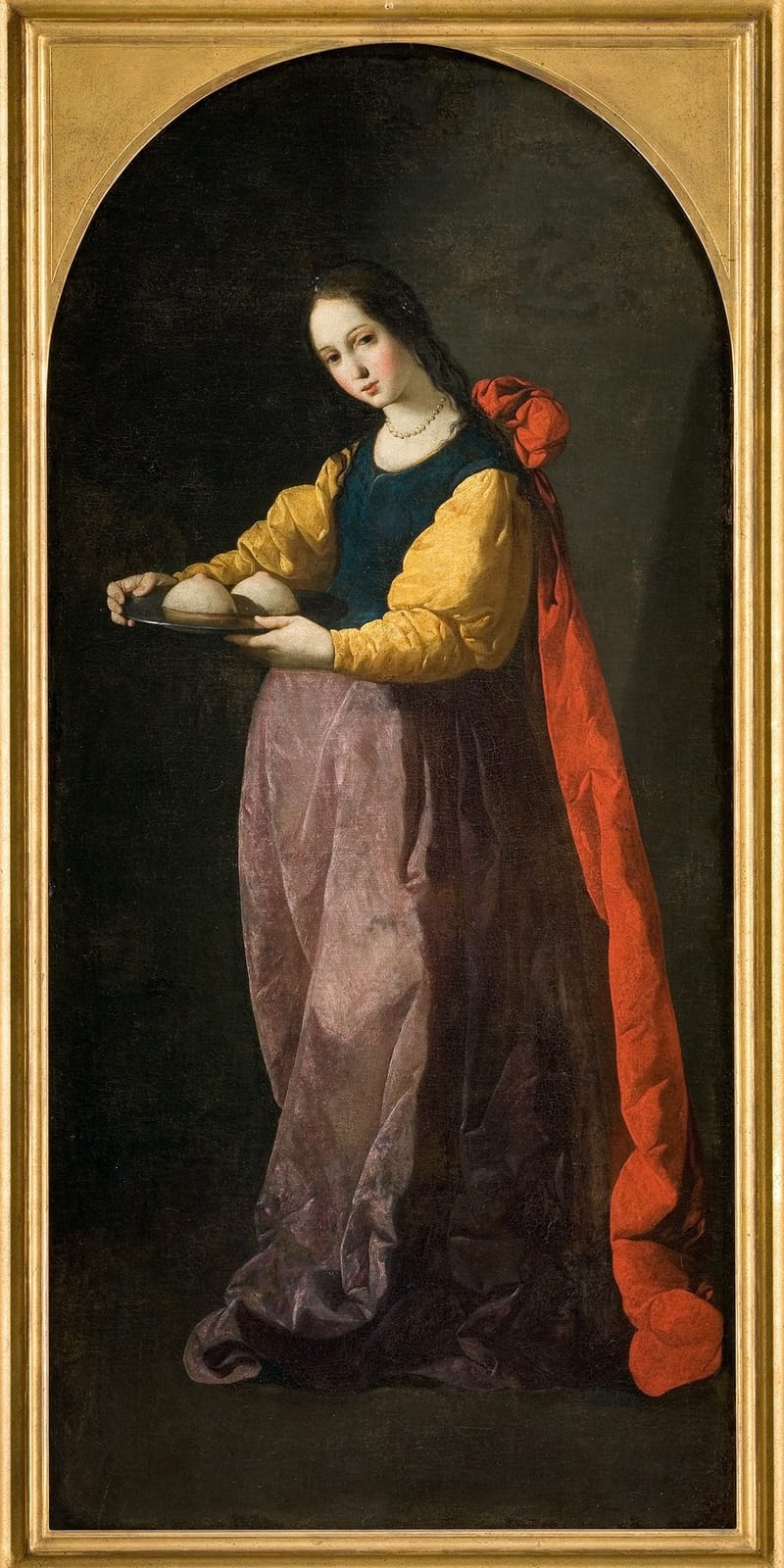
St Agatha in yellow sleeves and red mantle holding a platter with her severed breasts
Saint Agatha, Francisco de Zurbarán (1598–1664), c. 1635–40. Credits

Septuagesima

February 5, 2021

A Double leads the weekday.Rubric

February 5: St. Agatha, Virgin and Martyr

From Dom Guéranger’s The Liturgical Year.

Since the commencement of the ecclesiastical year, we have kept the feasts of two out of the four illustrious virgins whose names are daily honoured in the holy Sacrifice of the Lamb: the third comes to-day, lighting up the heaven of the Church with her bright soft rays. Lucy first, then Agnes, and now the gracious visit of Agatha. The fourth, Cecily, the immortal Cecily, is to be one of that magnificent constellation which gives such splendour to the closing of the year. To-day, then, let us keep a feast in honour of Agatha, the virgin daughter of that same fair Sicily which can boast of her Lucy. We must not allow the holy sadness of our present season to take aught from the devotion we owe to our saint. The joy wherewith we celebrate her merits will lead us to study her virtues. She will repay us by her prayers; she will encourage us to persevere in the path which is to bring us to the God she so nobly loved and served, and with whom she is now for ever united.

Friday of Septuagesima Week

From Dom Guéranger’s The Liturgical Year.

The curse, which is henceforth to lie so heavily on every human being, has been expressed in the sentence pronounced against Eve; the curse, to which the earth itself is to be subjected, is Adam’s sentence. ‘Because thou hast hearkened to the voice of thy wife, and hast eaten of the tree, whereof I commanded thee that thou shouldst not eat, cursed is the earth in thy work (that is, on account of what thou hast done).’ Adam had excused his sin. God does not admit his excuse; yet He mercifully makes allowance for him, seeing that he sinned, not so much to gratify himself, as to please the frail creature that had been formed out of his own substance. He is not the originator of the disobedient act. God, therefore, sentences him to the personal humiliation of labour and toil, and of eating his bread in the sweat of his brow. Outside the garden of Eden, there lies the immense desert of the earth.

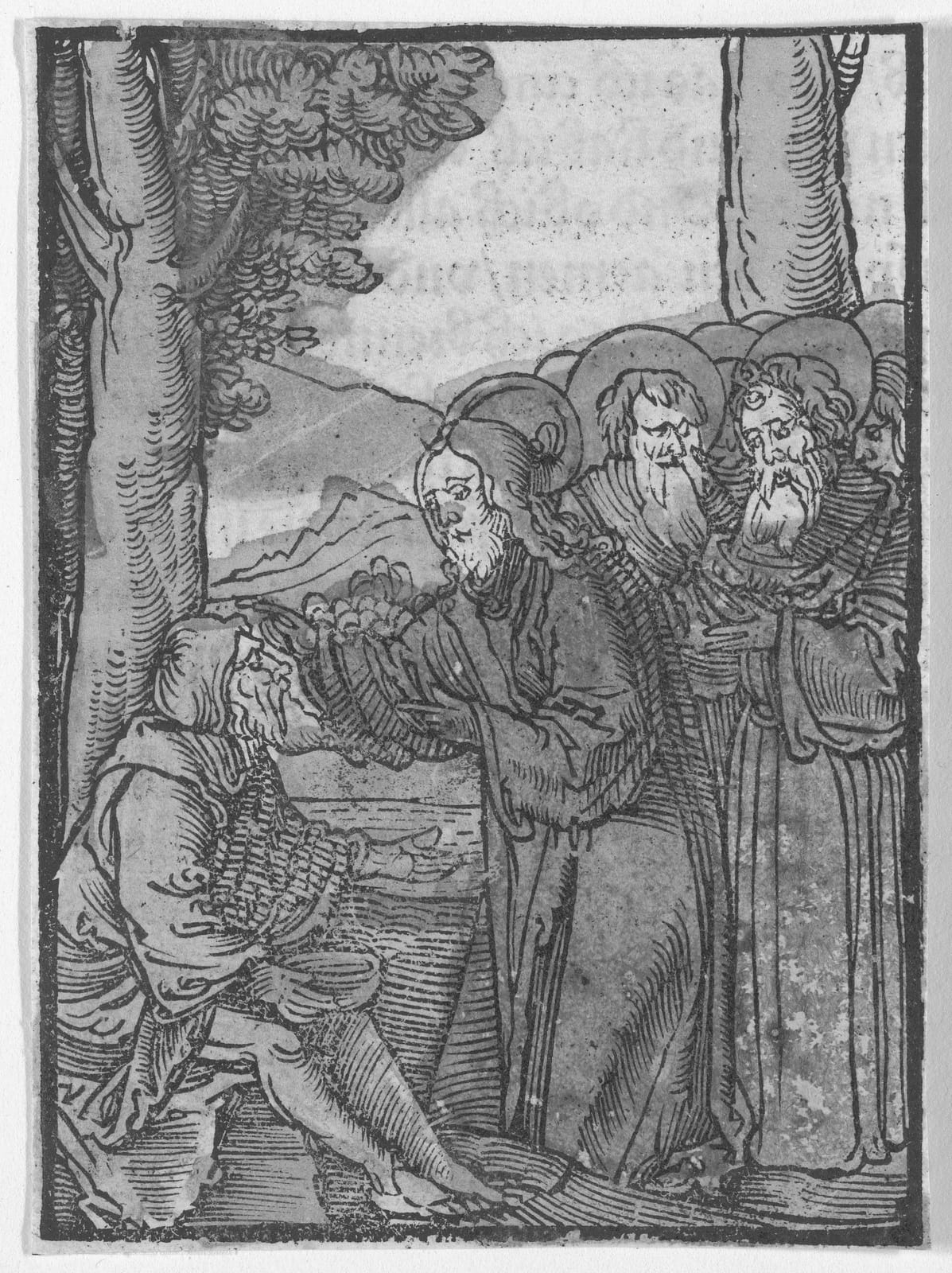
Christ healing a blind man
Hans Schäufelein (1480–1540), Christ Healing the Blind, from Das Plenarium, 1517. Credits

Email view of this day