This day

July 6, 2022

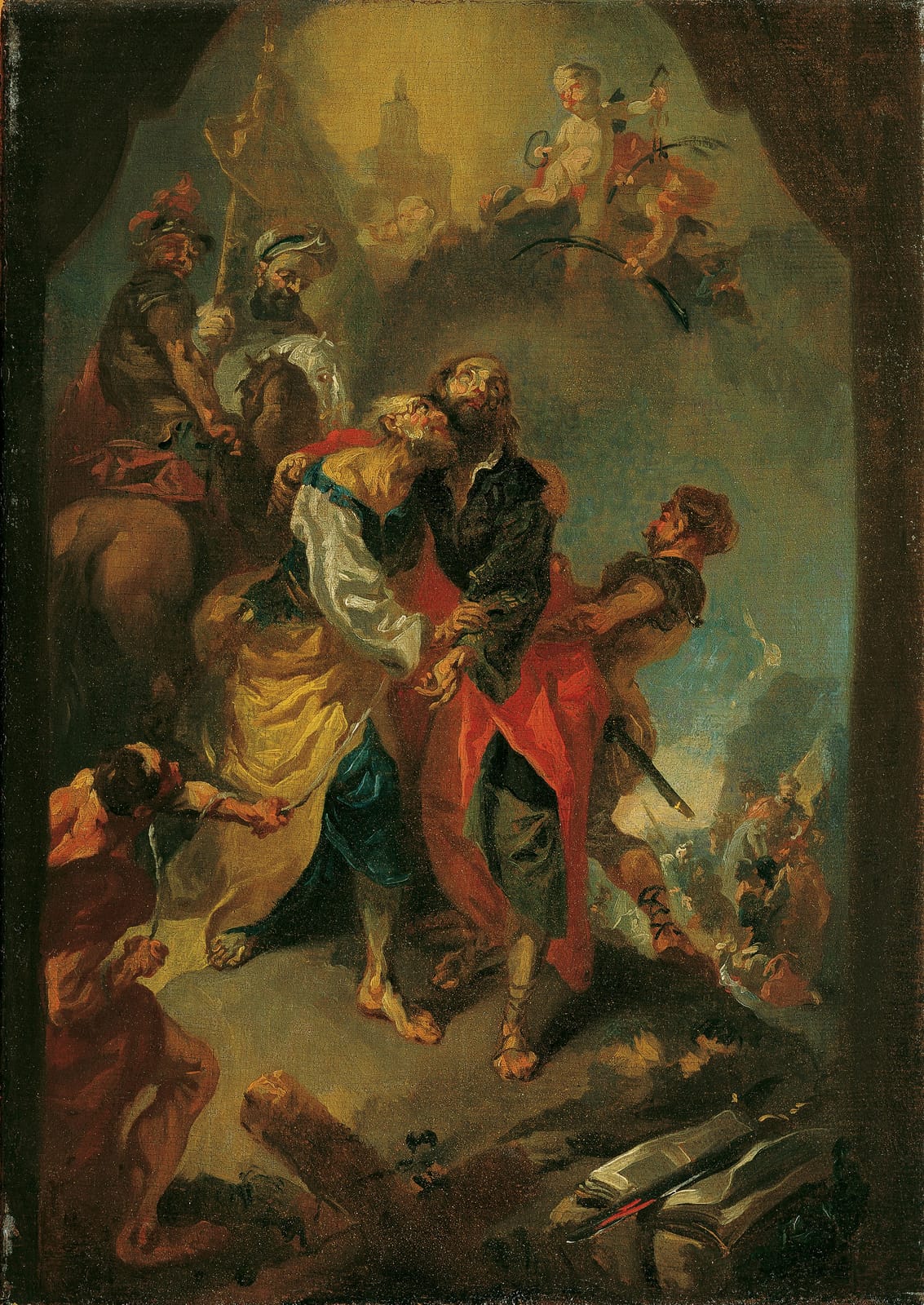
Farewell of the Apostles Peter and Paul before Their Martyrdom
Farewell of the Apostles Peter and Paul before Their Martyrdom, Franz Anton Maulbertsch (1724–1796), 2170. Credits

After Pentecost

July 6, 2022

July 6: The Octave Day of the Holy Apostles Peter and Paul

From Dom Guéranger’s The Liturgical Year.

FIRMLY resting upon Peter, the Church turns to him whom the Spouse has given to be her Head, and testifies to him no less veneration and love than obedience and fidelity; such is the craving of her gratitude. Moreover, she is fully aware of what is thus expressed by St Peter Damian (or as others say by a disciple of St Bernard): ' None may pretend to intimacy with our Lord unless he be intimate with Peter.' Such is the amirable harmony between God's approach to his creature and its advance towards him. God is not found save in Jesus; nor Jesus, save in the Church; nor the Church, save in Peter. 'If you had known me,' said Christ, ‘you would without doubt have known my Father also'; but the Jews sought God outside Jesus, and their efforts were vain. Since then others have come, wanting to find Jesus whilst setting aside his Church; but that which God has joined, what man shall put asunder? So these men, running after a Christ, a phantom of their own conceptions, have found neither Jesus Christ nor his Church.

This week's Sunday: The Fourth Sunday after Pentecost

From Dom Guéranger’s The Liturgical Year.

The fourth Sunday after Pentecost was called, for a long period, in the west, the Sunday of mercy, because, formerly, there was read upon it the passage from St. Luke beginning with the words: ‘Be merciful, as your Father is merciful.’ But, this Gospel having been since assigned to the Mass of the first Sunday after Pentecost, the Gospel of the fifth Sunday was made that of the fourth; the Gospel of the sixth became that of the fifth; and so on, up to the twenty-third. The change we speak of was, however, not introduced into many Churches till a very late period; and it was not universally received till the sixteenth century.

Whilst the Gospels were thus brought forward a week, in almost the whole series of these Sundays, the Epistles, Prayers, and the other sung portions of the ancient Masses were, with a few exceptions, left as originally drawn up. The connexion which the liturgists of the eleventh, twelfth, and thirteenth centuries had fancied they found between the Gospel and the rest of the liturgy for these Sundays was broken.

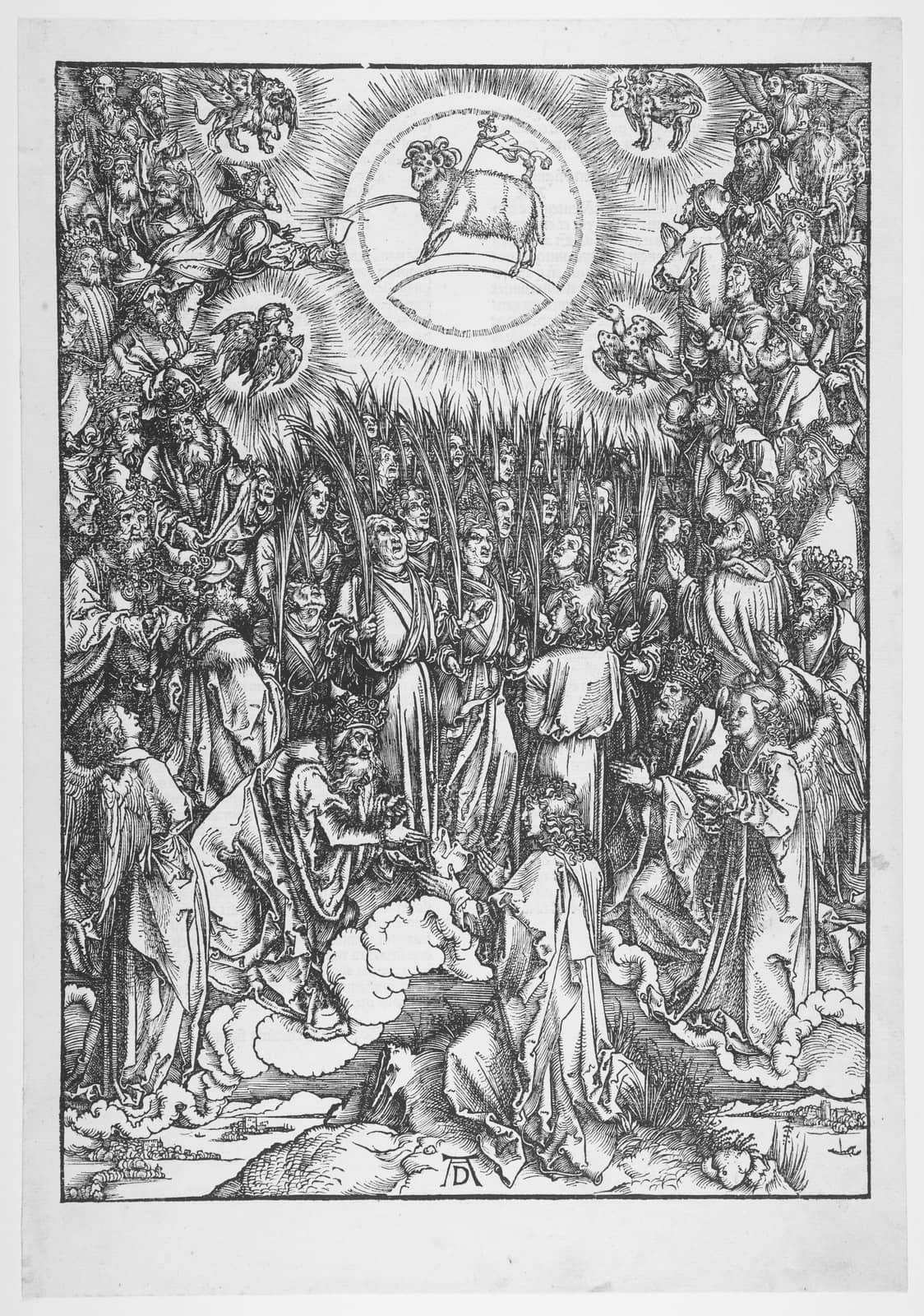
The elders and the saints adore the Lamb
Albrecht Dürer (1471–1528), The Adoration of the Lamb, from The Apocalypse, 1498. Credits

Email view of this day