This day

July 7, 2022

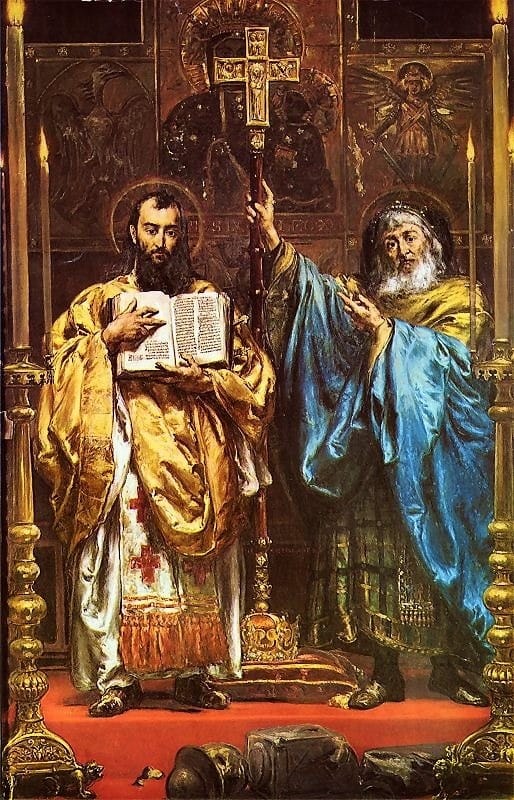
Ss Cyril and Methodius as bishop-missionaries
Cyril and Methodius. Credits

After Pentecost

July 7, 2022

July 7: Sts. Cyril and Methodius, Bishops and Confessors, Apostles of the Slavs

From Dom Guéranger’s The Liturgical Year.

TWIN stars this day arise in the heavens of holy Church, illuminating by the radiant beams of their apostolate immense tracts of country. Seeing that they start from Byzantium, one is at first led to suppose that their evolution is going to be performed independently of the laws which Rome has the right to dictate for the movement of the heavens, whereof it is said that they shall declare the glory of God and the works of his hand. But the auspicious influence of St Clement I, through his sacred relics, diverts their course, as we shall see, towards the mistress of the world; and presently they can be descried gravitating with matchless splendour in Peter's orbit, manifesting once more to the whole earth that all true light, in the order of salvation, radiates solely from the Vicar of the Man-God. Then once again is realized that word of the psalmist, that there are no speeches nor languages where the voices of the messengers of light are not heard.

To the sudden and splendid outburst of the good tidings that marked the first centuries of our era had succeeded the labours of the second apostolate, to which the Holy Ghost entrusted the gathering in of those new nations called by divine Wisdom to replace the ancient world.

This week's Sunday: The Fourth Sunday after Pentecost

From Dom Guéranger’s The Liturgical Year.

The fourth Sunday after Pentecost was called, for a long period, in the west, the Sunday of mercy, because, formerly, there was read upon it the passage from St. Luke beginning with the words: ‘Be merciful, as your Father is merciful.’ But, this Gospel having been since assigned to the Mass of the first Sunday after Pentecost, the Gospel of the fifth Sunday was made that of the fourth; the Gospel of the sixth became that of the fifth; and so on, up to the twenty-third. The change we speak of was, however, not introduced into many Churches till a very late period; and it was not universally received till the sixteenth century.

Whilst the Gospels were thus brought forward a week, in almost the whole series of these Sundays, the Epistles, Prayers, and the other sung portions of the ancient Masses were, with a few exceptions, left as originally drawn up. The connexion which the liturgists of the eleventh, twelfth, and thirteenth centuries had fancied they found between the Gospel and the rest of the liturgy for these Sundays was broken.

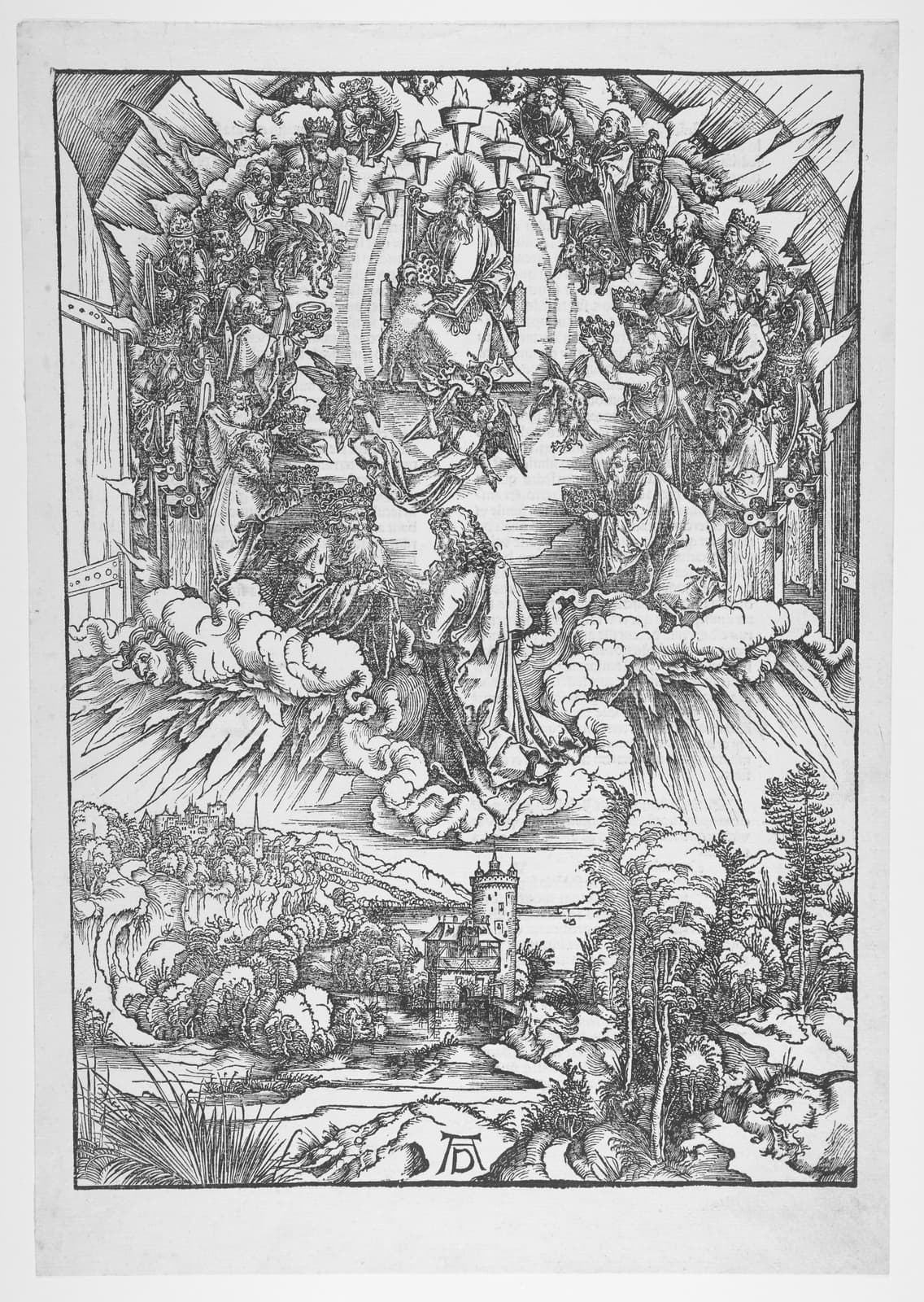
Saint John before God and the elders
Albrecht Dürer (1471–1528), Saint John Before God and the Elders, from The Apocalypse, 1498. Credits

Email view of this day