
This day

February 7, 2023

St Romuald in white Camaldolese habit seated with an open book against a gold ground
Saint Romuald, Bicci di Lorenzo (1373–1452). Credits

Septuagesima

February 7, 2023

A Double leads the weekday.Rubric

February 7: St. Romuald, Abbot

From Dom Guéranger’s The Liturgical Year.

The calendar’s list of martyrs is interrupted for two days; the first of these is the feast of Romuald, the hero of penance, the saint of the forests of Camaldoli. He is a son of the great patriarch St. Benedict, and, like him, is the father of many children. The Benedictine family has a direct line from the commencement, even to this present time; but, from the trunk of this venerable tree there have issued four vigorous branches, to each of which the Holy Spirit has imparted the life and fruitfulness of the parent stem. These collateral branches of the Benedictine Order are: Camaldoli, founded by Romuald; Cluny, by Odo; Vallombrosa, by John Gualbert; and Citeaux, by Robert of Molesmes.

The saint of this seventh day of February is Romuald. The martyrs whom we meet with on our way to Lent, give us an important lesson by the contempt they had for this short life. But the teaching offered us by such holy penitents as the great abbot of Camaldoli is even more practical than that of the martyrs. ‘They that are Christ’s,’ says the apostle, 'have crucified their flesh, with its vices and concupiscences’; and in these words he tells us what is the distinguishing character of every true Christian.

Tuesday of Septuagesima Week

From Dom Guéranger’s The Liturgical Year.

The serpent’s promises had stifled, in Eve’s heart, every sentiment of love for the God that had created her and loaded her with blessings: she is ambitious to be God like Him! Her faith, too, is wavering; she is not sure that God may not have deceived her, by threatening her with death should she disobey His command. Flushed by pride, she looks up to the forbidden fruit; it seems good to eat, and it is fair to her eyes. So that her senses too conspire against God, and against her own happiness. The sin is already committed in her heart; it needs but a formal act to make it complete. She cares for nothing but self; God is no more heeded than if He did not exist. She stretches forth her daring hand; she plucks the fruit; she puts it to her mouth, and eats!

God had said that if she broke His commandment she should die; she has eaten, she has sinned, and yet she lives as before! Her pride exults at this triumph, and, convinced that she is too strong for God’s anger to reach her, she resolves on making Adam a partner in her victory.

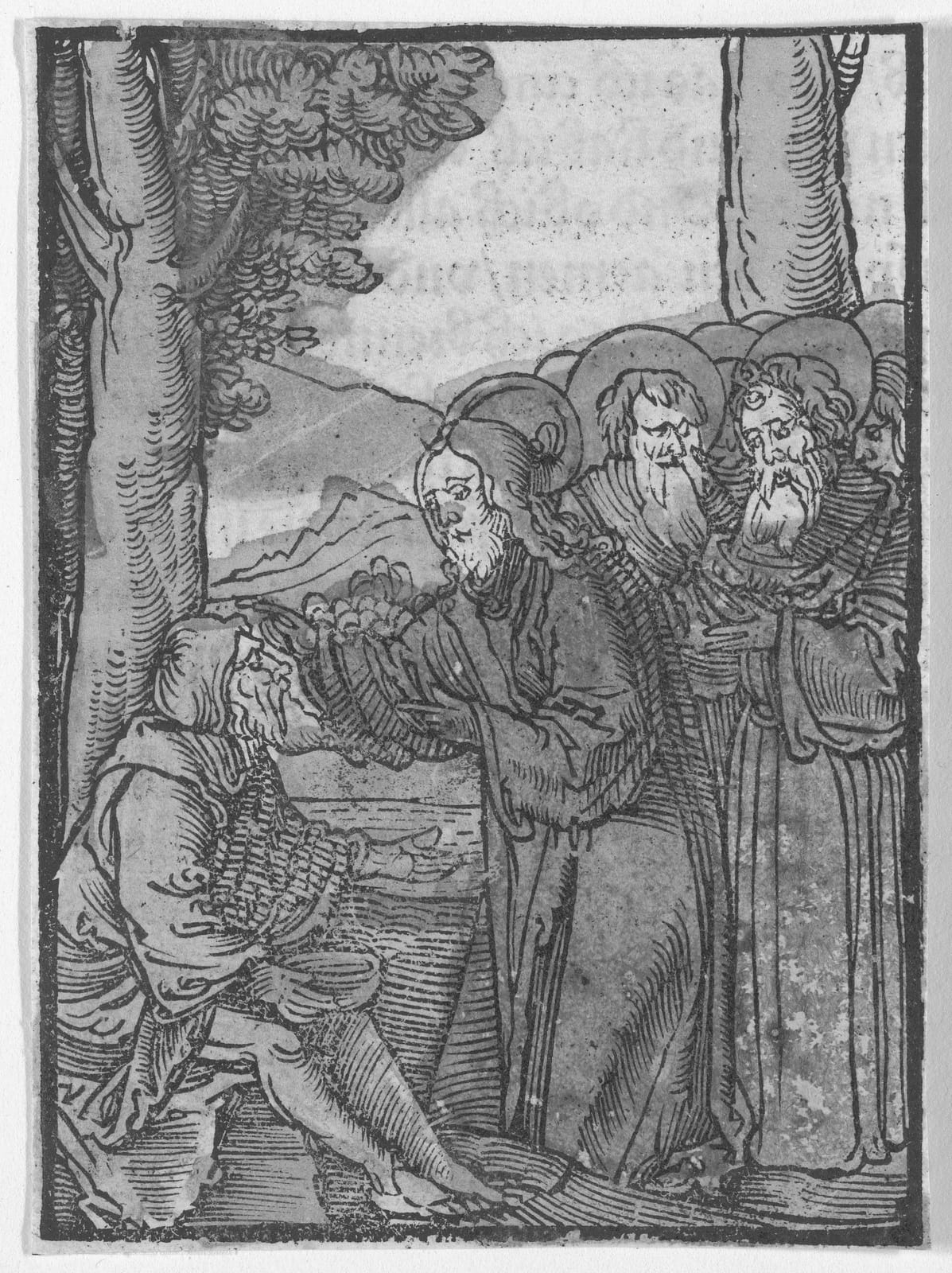
Christ healing a blind man
Hans Schäufelein (1480–1540), Christ Healing the Blind, from Das Plenarium, 1517. Credits

Email view of this day