Septuagesima
February 8, 2023
A Double leads the weekday.Rubric
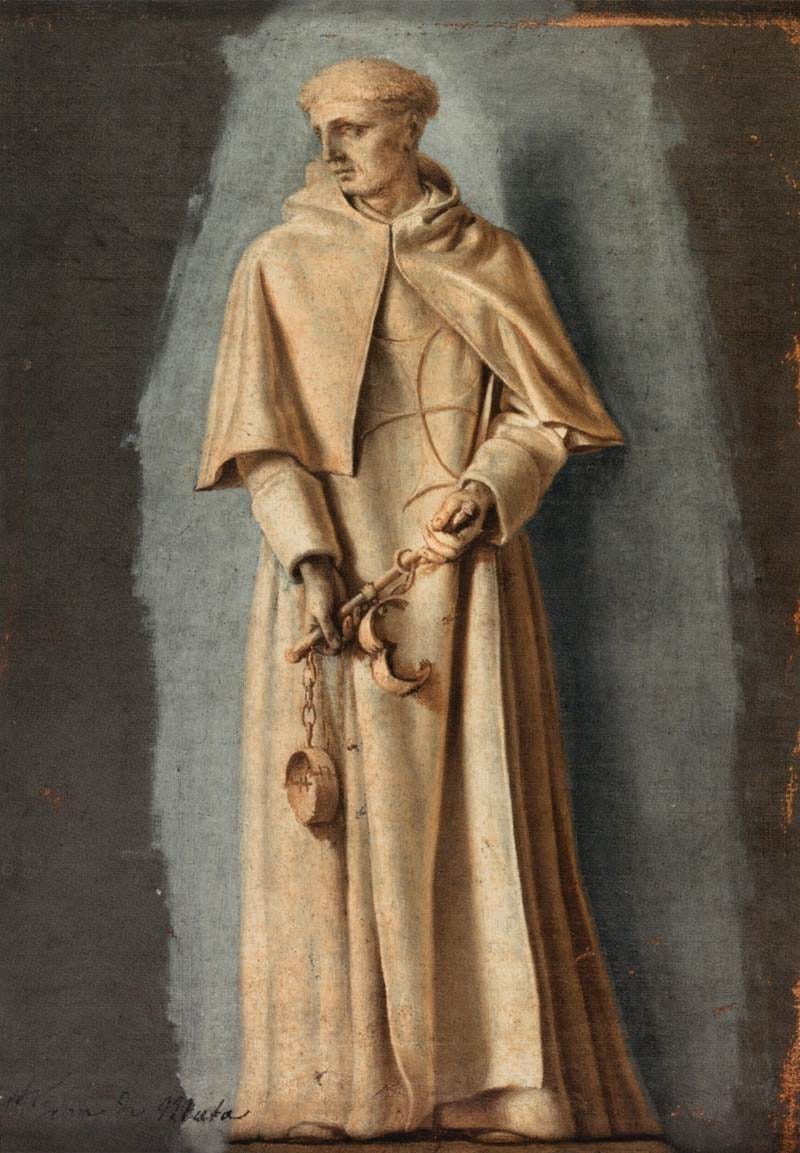
February 8: St. John of Matha, Confessor
From Dom Guéranger’s The Liturgical Year.
We were celebrating, not many days ago, the memory of Peter Nolasco, who was inspired, by the holy Mother of God, to found an Order for the ransoming of Christian captives from the infidels: to-day, we have to honour the generous saint, to whom this sublime work was first revealed. He established, under the name of the most holy Trinity, a body of religious men, who bound themselves by vow to devote their energies, their privations, their liberty, nay, their very life, to the service of the poor slaves who were groaning under the Saracen yoke. The Order of the Trinitarians, and the Order of Mercy, though distinct, have the same end in view, and the result of their labours, during the six hundred years of their existence, has been the restoration to liberty and preservation from apostasy of upwards of a million slaves. John of Matha, assisted by his faithful co-operator, Felix of Valois (whose feast we shall keep at the close of the year), established the centre of his grand work at Meaux, in France. We are preparing for Lent, when one of our great duties will have to be that of charity towards our suffering brethren: what finer model could we have than John of Matha, and his whole Order, which was called into existence for no other object than that of delivering from the horrors of slavery brethren who were utter strangers to their deliverers, but were in suffering and in bondage.