This day

February 5, 2026

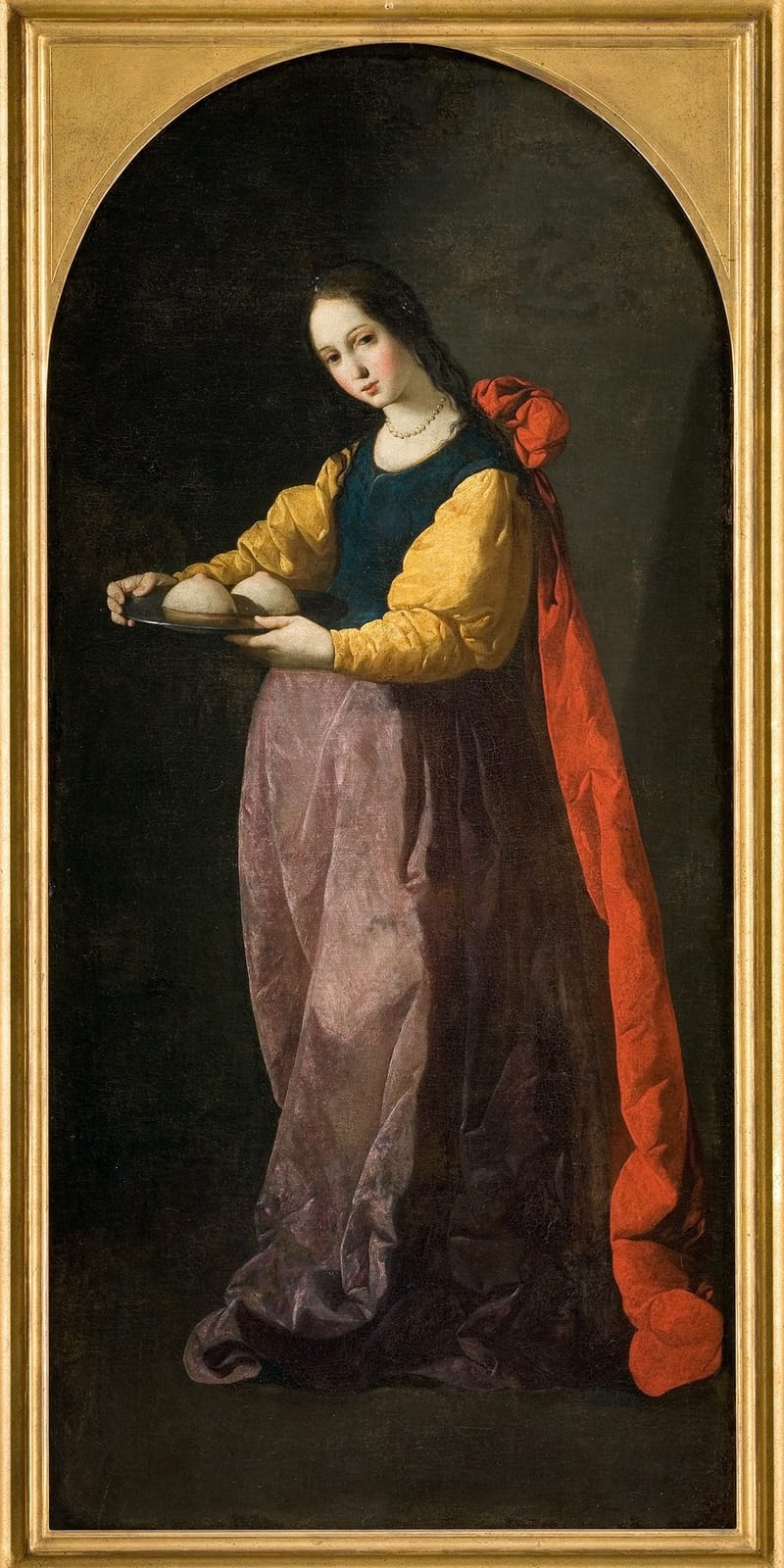
St Agatha in yellow sleeves and red mantle holding a platter with her severed breasts
Saint Agatha, Francisco de Zurbarán (1598–1664), c. 1635–40. Credits

Septuagesima

February 5, 2026

A Double leads the weekday.Rubric

February 5: St. Agatha, Virgin and Martyr

From Dom Guéranger’s The Liturgical Year.

Since the commencement of the ecclesiastical year, we have kept the feasts of two out of the four illustrious virgins whose names are daily honoured in the holy Sacrifice of the Lamb: the third comes to-day, lighting up the heaven of the Church with her bright soft rays. Lucy first, then Agnes, and now the gracious visit of Agatha. The fourth, Cecily, the immortal Cecily, is to be one of that magnificent constellation which gives such splendour to the closing of the year. To-day, then, let us keep a feast in honour of Agatha, the virgin daughter of that same fair Sicily which can boast of her Lucy. We must not allow the holy sadness of our present season to take aught from the devotion we owe to our saint. The joy wherewith we celebrate her merits will lead us to study her virtues. She will repay us by her prayers; she will encourage us to persevere in the path which is to bring us to the God she so nobly loved and served, and with whom she is now for ever united.

Thursday of Septuagesima Week

From Dom Guéranger’s The Liturgical Year.

Forgiveness is promised; but atonement must be made. Divine justice must be satisfied, and future generations be taught that sin can never pass unpunished. Eve is the guiltier of the two, and her sentence follows that of the serpent. Destined by God to aid man in peopling the earth with happy and faithful children, formed by this God out of man’s own substance 'flesh of his flesh, and bone of his bones,’ woman was to be on an equality with man. But sin has subverted this order, and God’s sentence is this: conjugal union, notwithstanding the humiliation of concupiscence now brought upon it, is to be, as before, holy and sacred; but it is to be inferior in dignity, before both God and man, to the state of virginity, which disdains the ambitions of the flesh.

Secondly, woman shall be mother still, as she would have been in the state of innocence; but her honour shall be a burden.

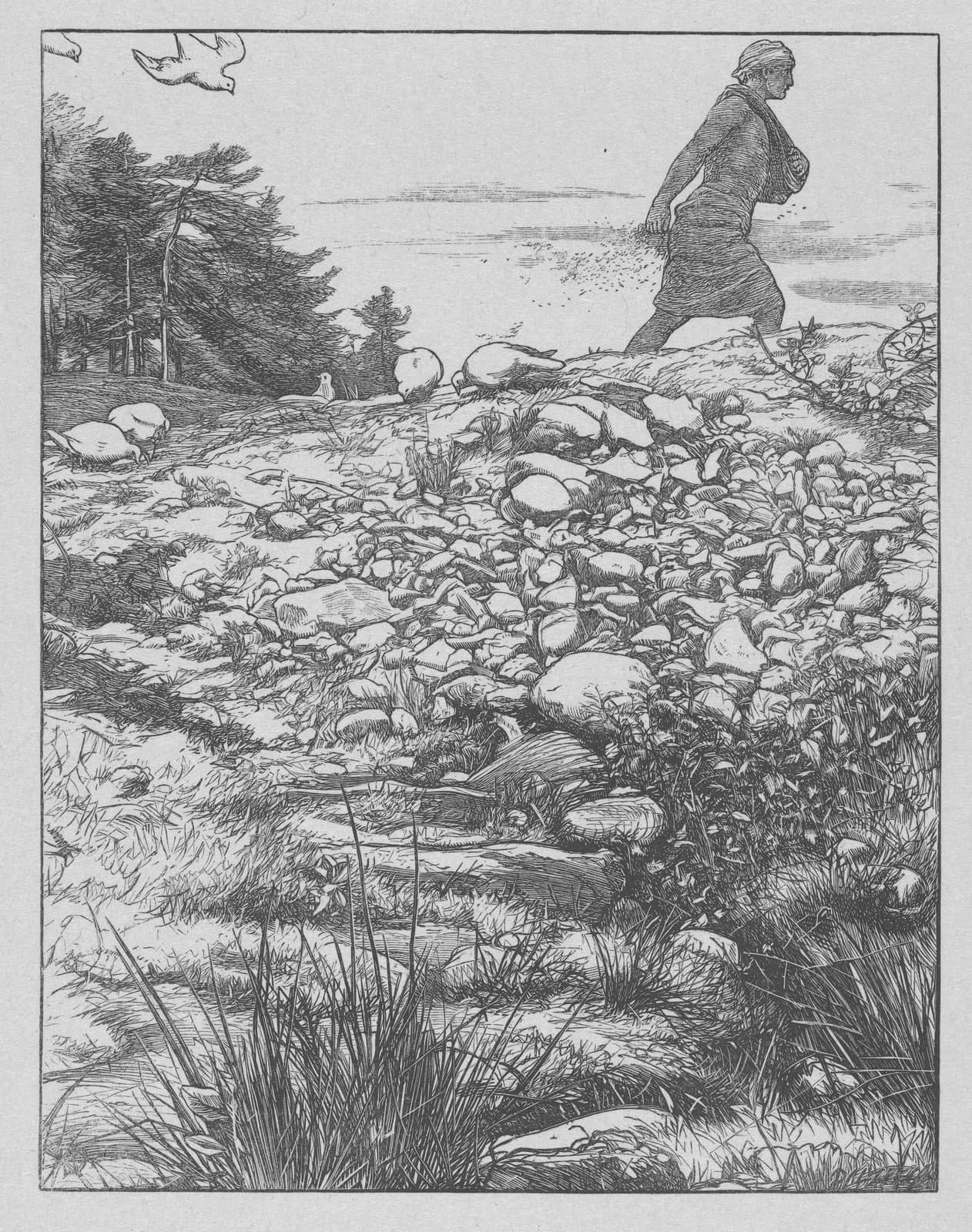
A sower scatters seed on rocky and thorny ground
Sir John Everett Millais (1829–1896), The Sower, from The Parables of Our Lord and Saviour Jesus Christ, 1864. Credits

Email view of this day