This day

July 7, 2026

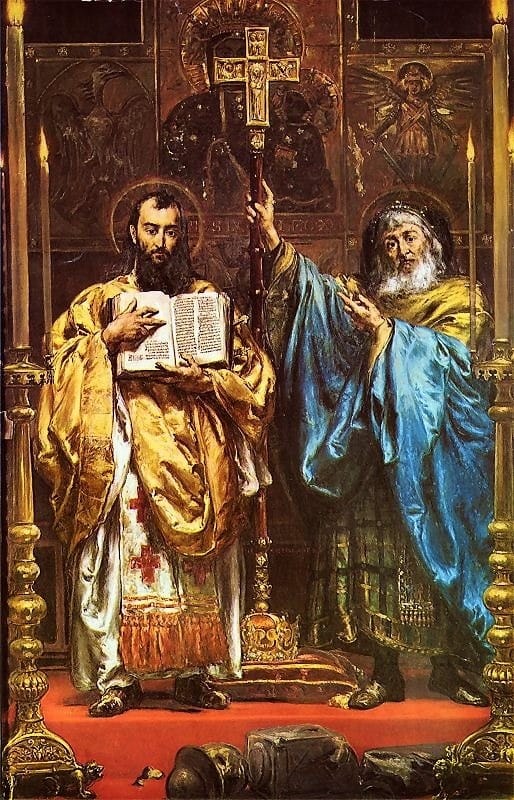
Ss Cyril and Methodius as bishop-missionaries
Cyril and Methodius. Credits

After Pentecost

July 7, 2026

July 7: Sts. Cyril and Methodius, Bishops and Confessors, Apostles of the Slavs

From Dom Guéranger’s The Liturgical Year.

TWIN stars this day arise in the heavens of holy Church, illuminating by the radiant beams of their apostolate immense tracts of country. Seeing that they start from Byzantium, one is at first led to suppose that their evolution is going to be performed independently of the laws which Rome has the right to dictate for the movement of the heavens, whereof it is said that they shall declare the glory of God and the works of his hand. But the auspicious influence of St Clement I, through his sacred relics, diverts their course, as we shall see, towards the mistress of the world; and presently they can be descried gravitating with matchless splendour in Peter's orbit, manifesting once more to the whole earth that all true light, in the order of salvation, radiates solely from the Vicar of the Man-God. Then once again is realized that word of the psalmist, that there are no speeches nor languages where the voices of the messengers of light are not heard.

To the sudden and splendid outburst of the good tidings that marked the first centuries of our era had succeeded the labours of the second apostolate, to which the Holy Ghost entrusted the gathering in of those new nations called by divine Wisdom to replace the ancient world.

This week's Sunday: The Sixth Sunday after Pentecost

From Dom Guéranger’s The Liturgical Year.

The Office for the sixth Sunday after Pentecost, which began yesterday evening, reminded us, in its Magnificat antiphon, of a repentance which has never had an equal. David, the royal prophet, the conqueror of Goliath, himself conquered by sensuality, and from adulterer become a murderer, at last felt the crushing weight of his double crime, and exclaimed: 'I do beseech thee, O Lord, take away the iniquity of thy servant, for I have done foolishly!'

Sin is always a folly and a weakness, no matter of what kind it may be, or who he be that commits it. The rebel angel, and fallen man, may, in their pride, make efforts to persuade themselves that, when they sinned, they did not act as fools, and were not weak; but all their efforts are vain; sin must ever have this disgrace upon it, that it is folly and weakness, for it is a revolt against God, a contempt for His law, a mad act or the creature, who, being made by his. Creator to attain infinite happiness and glory, prefers to debase himself by turning towards nothingness, and then falls even lower than the nothingness from which he was taken.

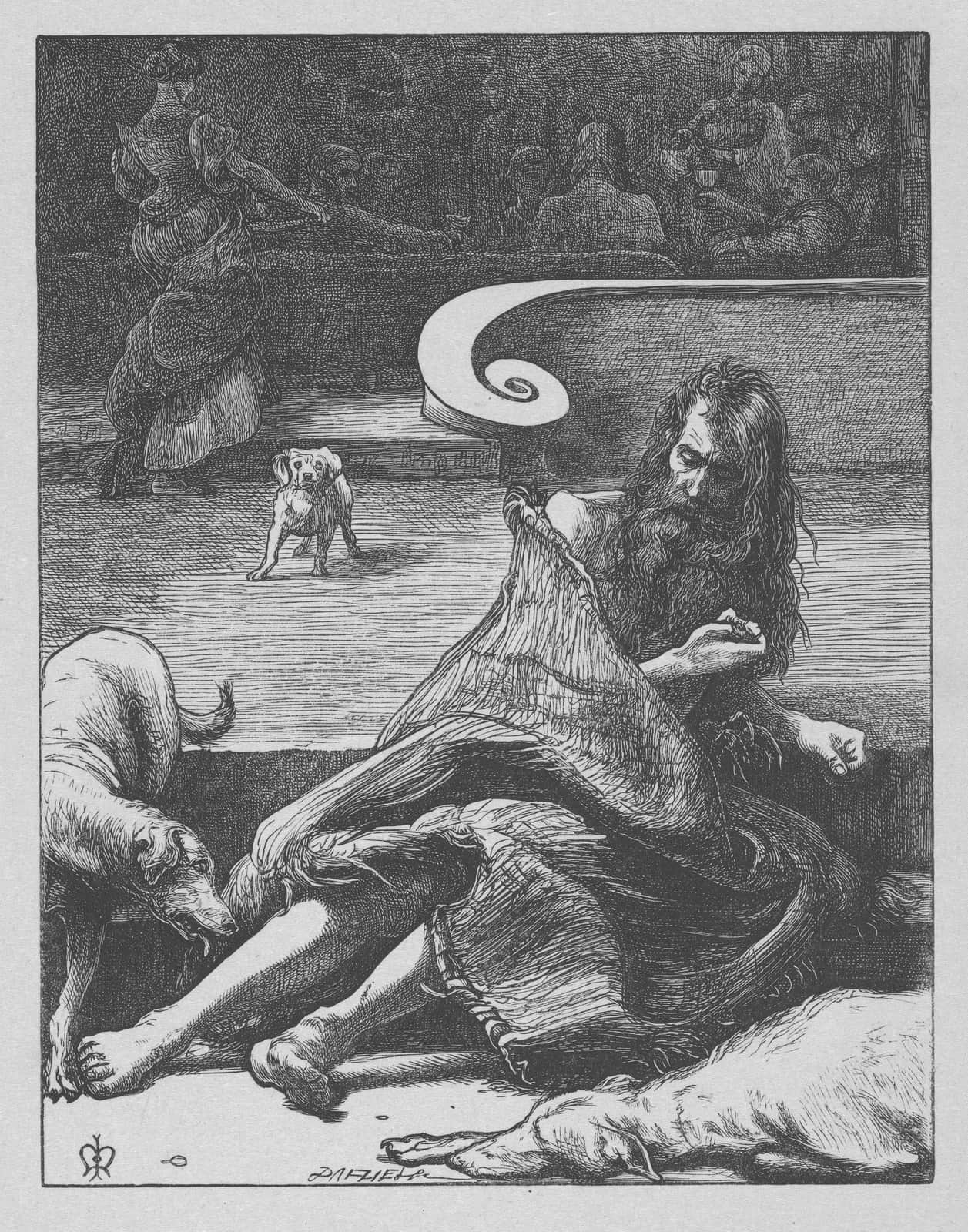
The rich man and Lazarus
Sir John Everett Millais (1829–1896), The Rich Man and Lazarus, from The Parables of Our Lord and Saviour Jesus Christ, 1864. Credits

Email view of this day