This day

August 16, 2026

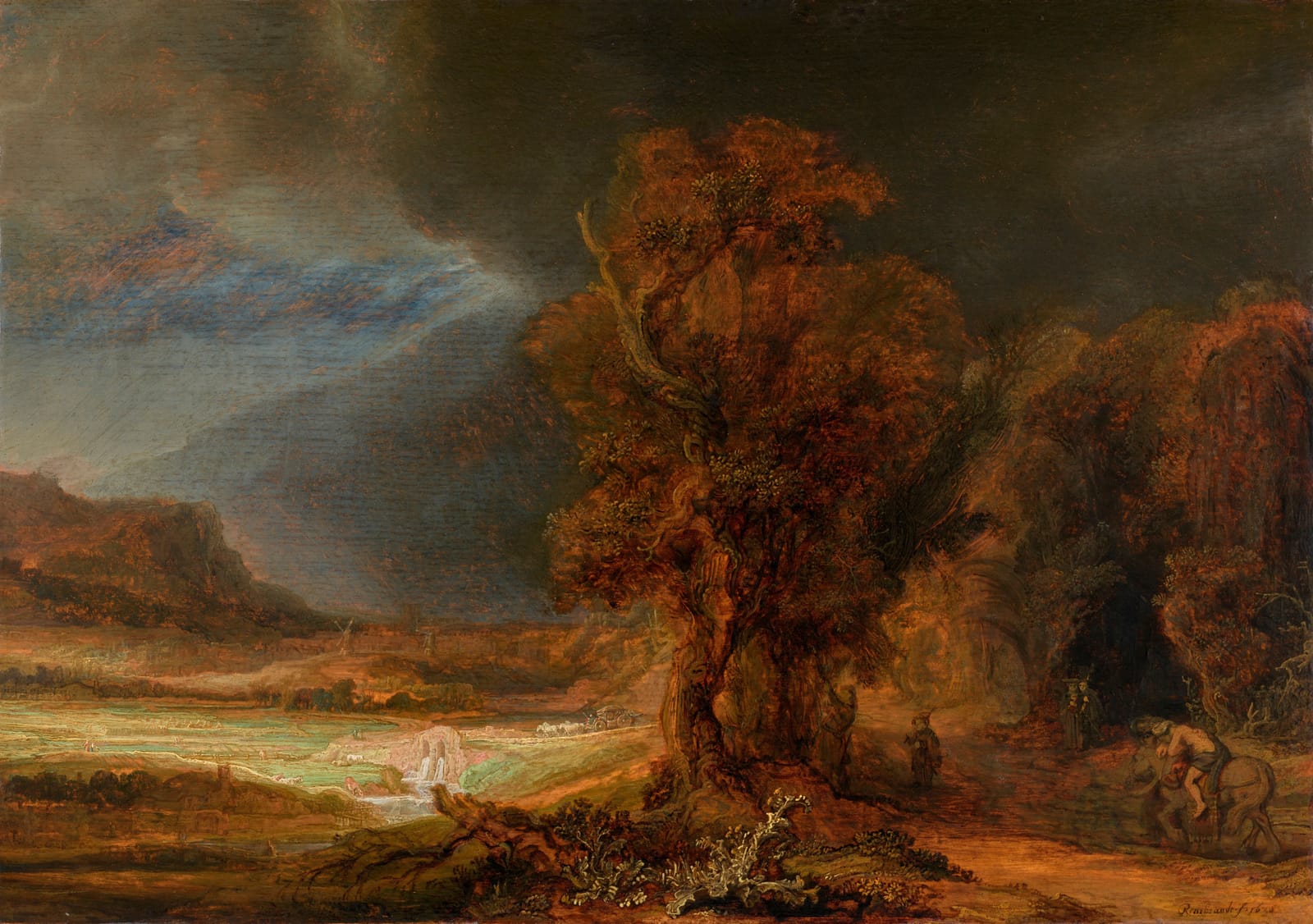
Landscape with the Good Samaritan
Landscape with the Good Samaritan, Rembrandt (1606–1669), 1638. Credits

After Pentecost

August 16, 2026

The Twelfth Sunday after Pentecost

From Dom Guéranger’s The Liturgical Year.

On this Sunday, which is their twelfth of Saint Matthew, the Greeks read in the Mass the episode of the young rich man who questions Jesus, given in the nineteenth chapter of the Saint’s Gospel. In the west, it is the Gospel of the Good Samaritan which gives its name to this twelfth Sunday after Pentecost.

The Introit begins with that beautiful verse of Psalm lxix.: 'Come to mine assistance, O God! O Lord, make haste to help me!’ Cassian, in his tenth Conference, has admirably drawn out the beauty of these words, and shows how they are appropriate for every circumstance of life, and how fully they respond to every sentiment of the Christian soul. Durandus applies this Introit to Job, because the lessons for the Divine Office, which are taken from that Book of Scripture, sometimes, though not often, coincide with this Sunday. Rupert looks on this Introit as the fitting prayer of the deaf and dumb man, whose cure was the subject of our reflexions this day last week. He says: 'The human race, in the person of our first parents, had become deaf to the commandments of God, and dumb in His praise; the first use he makes of his untied tongue, is to call upon the God who has healed him.'
Chapter 4: Morning and Night Prayers for the Time after Pentecost

From Dom Guéranger’s The Liturgical Year.

During this second part of the year, the Christian, on waking in the morning, will unite himself with holy Church, who, every day in her Office of Lauds, hails the return of light, making use of these words of the royal prophet: Deus, Deus meus, ad te de luce vigilo.

He will profoundly adore the divine Majesty; and, thanking his sovereign Lord, who has protected him while involved in the darkness of night, he will proffer Him his service for the whole day which is now commencing; he will wish to spend it in love and obedience, as behoves one whom Christ has united to Himself by His mysteries, and whom the Holy Ghost is willing to guide and govern. The time for morning prayer being come, he may give expression to the sentiments which should then animate his soul, by using these formulas of the Church: First, praise and adoration of the most holy Trinity:
℣. Benedicamus Patrem et Filium cum Sancto Spiritu.
℟. Laudemus et superexaltemus eum in sæcula.

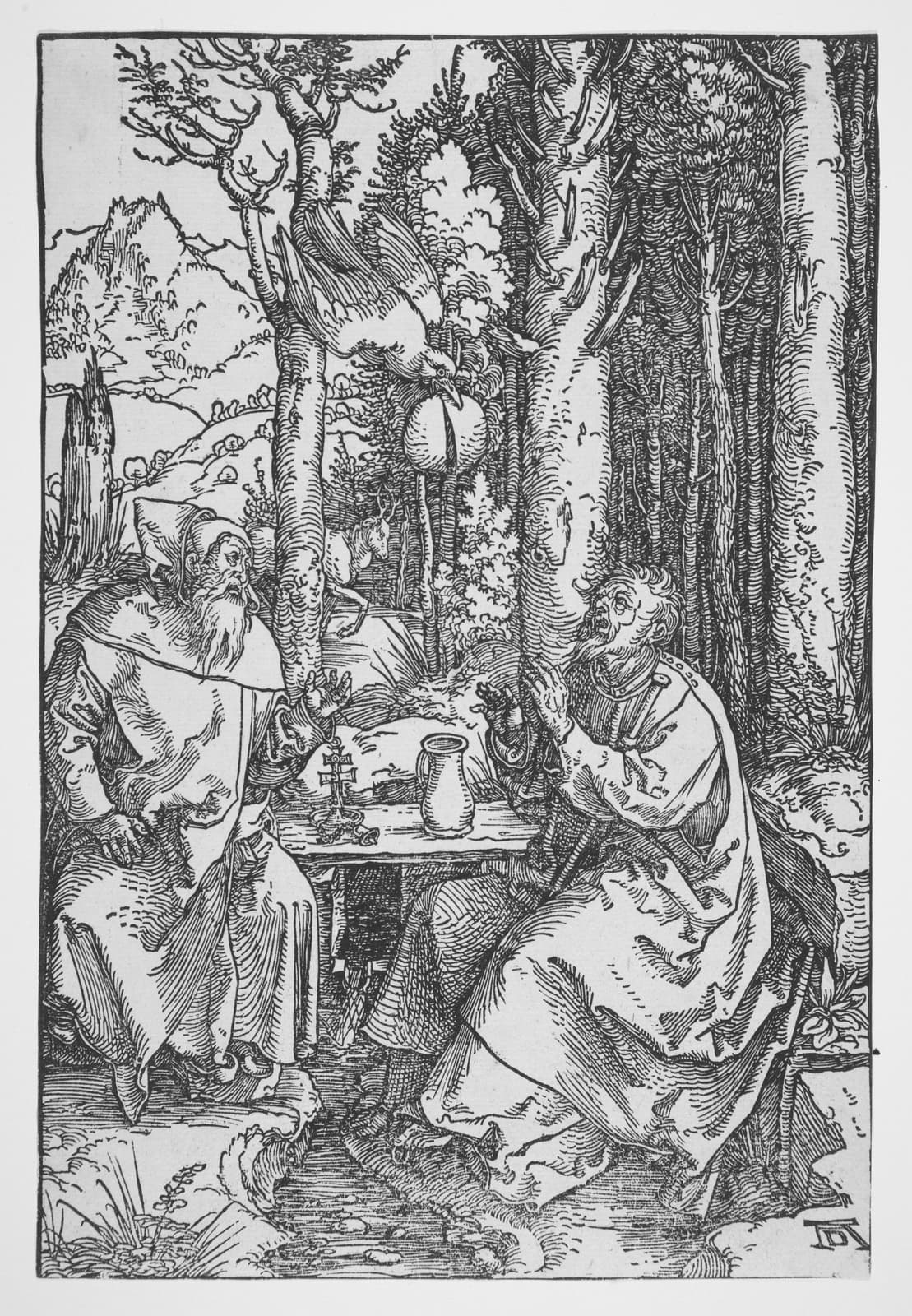
Saint Anthony visiting Saint Paul the Hermit in the desert
Albrecht Dürer (1471–1528), Saint Anthony and Saint Paul in the Desert, ca. 1503. Credits

Email view of this day